Highlighting art, technology, and cultural exchange along the Silk Roads,this major exhibition weaves a rich tapestry of Chinese history in silk
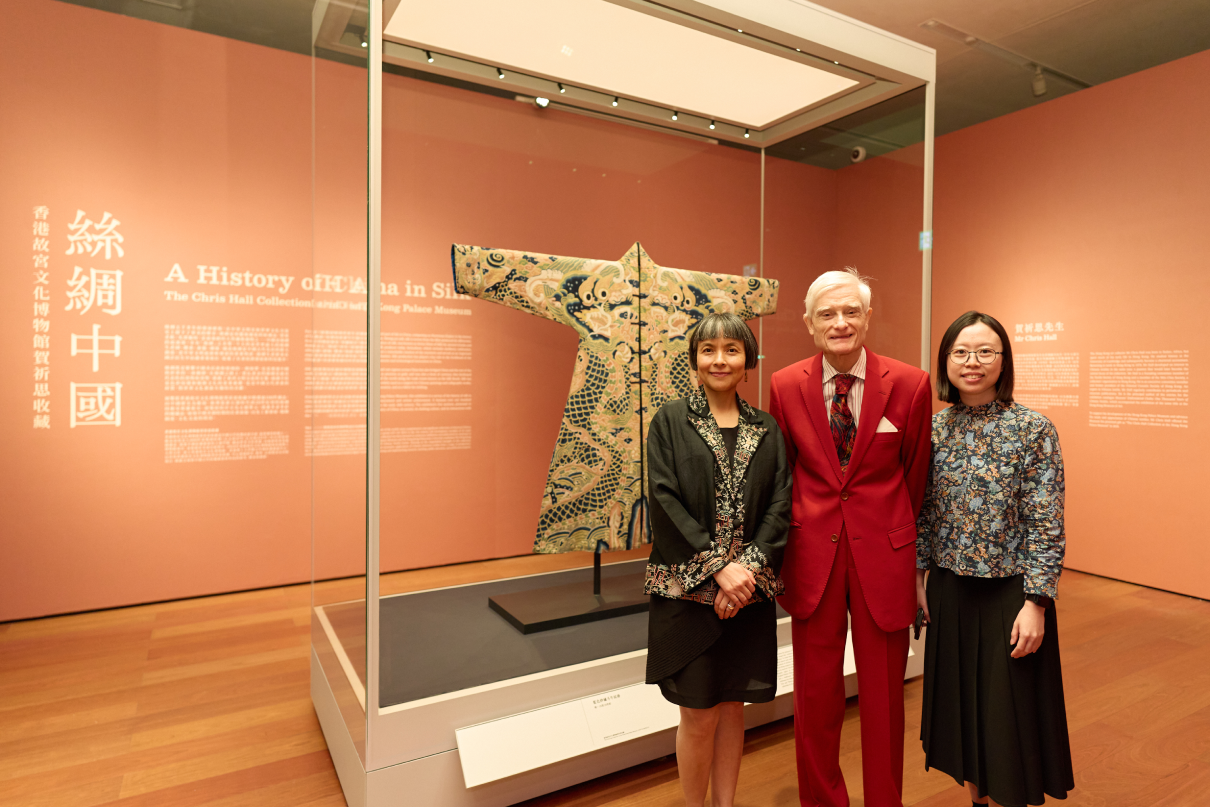
The Hong Kong Palace Museum (HKPM or the Museum) will present a new thematic exhibition, “A History of China in Silk: The Chris Hall Collection at the Hong Kong Palace Museum” (“A History of China in Silk”) in Gallery 6 from 1 October 2025 to 4 May 2026. Drawing on the Chris Hall Collection at the Hong Kong Palace Museum (“the Collection”), a promised gift to the Museum, this major exhibition features over 100 spectacular Chinese textile treasures dating from the Warring States period (475–221 BCE) to the early 20th century. Placing the development of silk within the broader context of Chinese history, the exhibition celebrates China’s technological and artistic achievements as well as its interactions with the rest of the world over the past three millennia.
In December 2024, the renowned Hong Kong-based art collector, Mr Chris Hall, offered a promised gift to the HKPM: the Chris Hall Collection at the Hong Kong Palace Museum, which will be formally donated to the Museum in 10 years, that is 2034. The Collection includes nearly 3,000 works, some of which have been transferred to the Museum since 2024. Internationally recognised for its breadth and depth, the Collection stands among the world’s most comprehensive and significant collections of historical Chinese textiles.
Leo Kung, Chairman of the HKPM Board, said, “Silk is not only a luxurious material used for garments but is also integrated into almost every aspect of Chinese life, including the economy, technology, religious rituals, and art. As a treasured commodity in international trade and through silk road, silk has connected China to the wider world for millennia. Therefore, understanding Chinese silk is the key to unlocking deeper insights into Chinese culture. Surviving examples of ancient Chinese textiles are exceedingly rare, and we are profoundly grateful for Chris Hall’s commitment to donate his collection of silk clothing and other objects to the museum, making this important exhibition possible. Through exhibitions, scholarly research and educational initiatives, the HKPM remains committed to advancing the study of historical Chinese textiles and to fostering cultural exchanges on a global scale.”
Chris Hall, an esteemed Hong Kong collector of Chinese textiles, said, “I love China and Chinese textiles. For four decades, I have been collecting and preserving precious Chinese textiles with the hope of returning them to their birthplace for study and display. I am delighted that this collection will be on view and eventually find its home at the Hong Kong Palace Museum. Beyond showcasing the breathtaking beauty of these works, the exhibition will make a significant contribution to the still underexplored field of Chinese textile studies. Through its accompanying publication and international symposium, this exhibition will help inspire new scholarship and young scholars. I am grateful to the talented and dedicated HKPM team.”
Charting the rich history of Chinese silk with stunning works
Strong yet soft, silk is woven from the fibre produced by silkworms, with a distinctive natural lustre that adds to its appeal. China, long revered as Serica (State of Silk), is not only the birthplace of silk but also remains the world’s largest producer today. Through the Silk Road and the Maritime Silk Road, Chinese silk was transported to Asia, Europe, and other parts of the world, serving as a vital medium for cultural exchange between the East and the West in ancient times. For more than 5,000 years, silk has composed an illustrious chapter in the history of Chinese civilisation and global cultural interaction. The exhibition “A History of China in Silk” weaves a rich and colourful tapestry of China, its society, clothing culture, and interactions with the world across the ages.
“A History of China in Silk” unfolds chronologically in five sections. The opening section spans from the late Neolithic period to the Northern and Southern dynasties (ca. 3000 BCE–589 CE) and introduces the development of silk production techniques and cultural exchanges along the Silk Roads. The second section presents the flourishing silk arts of the Sui and the Tang dynasties (581–907), highlighting the fusion of the Chinese and foreign elements in technique and decoration. The third section examines silk weaving and decorative techniques in a variety of regions from the Song to the Yuan dynasties (960–1368), including the rise and development of silk tapestry and motifs such as landscapes and animals from northern China, while also highlighting the close ties with West Asia and Europe. The fourth section explores the magnificent religious and court textiles of the Ming dynasty (1368–1644). The final section focuses on textile production in China’s last imperial dynasty, the Qing (1644–1911), when court wardrobe management was perfected and China’s silk export trade boomed.
Highlights from this exhibition include the earliest textile among the exhibits—a piece with facing dragons and phoenixes, and geometric decorations from the Warring States period; a robe with pairs of facing lions in pearl roundels from the Tang dynasty (618–907); a coat with ox-horn dragons from the Ming dynasty; and a large group of Ming and Qing rank badges.
Innovative and diverse educational offerings and scholarly programmes
“A History of China in Silk” features innovative and engaging multimedia installations that deepen visitors’ appreciation of the beauty and significance of silk. A highlight of this exhibition, the Daoist ritual robe with the Three Officials of Heaven, Earth, and Water (Ming dynasty, probably Jiajing period 1522–1566), is accompanied by an interactive display that utilises high-resolution imaging to reveal details and decipher the Daoist universe that is exquisitely embroidered on the robe.
Rank badges with woven or embroidered images of birds or animals signified the rank and status of their wearers during the Ming and Qing dynasties. Visitors can appreciate these badges up close and choose their own personalised digital rank badges through a nearby interactive installation, which also sheds light on the Qing bureaucratic system and the symbolism of the birds and animals depicted.
In conjunction with the exhibition, the Museum will offer a number of public and scholarly programmes and publish an exhibition publication featuring essays by an international team of scholars and curators on the history of Chinese textiles. In 2024, the HKPM and the Hong Kong Polytechnic University (PolyU) jointly established “The Hong Kong Palace Museum – The Hong Kong Polytechnic University Joint Chinese Textile Centre” (“the Centre”). The Centre is planning a major international symposium on Chinese textiles in 2026, and to organise special study visits to this exhibition and to the Chris Hall Collection at the Hong Kong Palace Museum for PolyU students and faculty, with the aim of facilitating teaching and inspiring new research and design ideas.
“A History of China in Silk: The Chris Hall Collection at the Hong Kong Palace Museum” is open to the public from 1 October 2025 to 4 May 2026 in Gallery 6 of the HKPM. Visitors can access the exhibition with a General Admission ticket (access to Galleries 1 to 7, HK$70 for adults, HK$35 for concessions) or any Special Exhibition ticket (access to Galleries 1 to 7, as well as Gallery 8 and/or 9). Tickets are now available for sale or reservation through the West Kowloon Cultural District’s online ticketing platforms and its ticketing partners. Please refer to the HKPM website for more information.
Remarks
About the Hong Kong Palace Museum
Through innovative curatorial approaches, the Hong Kong Palace Museum presents priceless treasures from The Palace Museum along with the finest collections from other world-�renowned institutions. The Museum is also in the process of building its own world-class collection. Opened in 2022, the Museum is a leading institution for the study and appreciation of Chinese art and culture and the promotion of dialogue among world civilisations. The Museum is a collaborative project between the West Kowloon Cultural District Authority and The Palace Museum. The Hong Kong Jockey Club Charities Trust made a donation of HK$3.5 billion for its establishment, as well as some of the annual exhibitions and education programmes in 2023–2031.
Through research, exhibitions, publications, and educational and professional exchange programmes, the Museum builds international partnerships and positions Hong Kong as a global hub for art and culture. A resource that belongs to the local community, the Museum inspires community engagement, fosters dialogue, and promotes creativity and interdisciplinary collaboration.
About the West Kowloon Cultural District (WestK)
WestK is one of the largest and most ambitious cultural hubs in the world and Hong Kong’s new cultural tourism landmark, spanning 40 hectares alongside Victoria Harbour. WestK comprises a mix of landmark arts and cultural facilities, including world-class museums M+ and the Hong Kong Palace Museum, intricately designed performing arts venues the Xiqu Centre and Freespace, the 11-hectare Art Park with a waterfront promenade, and the upcoming WestK Performing Arts Centre.
Hosting over 1,000 exhibitions, performances, programmes, and events each year, WestK provides a vital platform for both emerging and established artists. WestK welcomes more than 10 million visitors each year, evolving as the international cultural brand of Hong Kong and strengthening the city’s strategic role as an East-meets-West centre for international cultural exchange.
https://www.westk.hk