Jointly curated by The Metropolitan Museum of Art and the Hong Kong Palace Museum, the HKPM presents the debut travelling showcase of The Met’s encyclopaedic jewellery collection, illuminating 4,000 years of adornment across five continents.
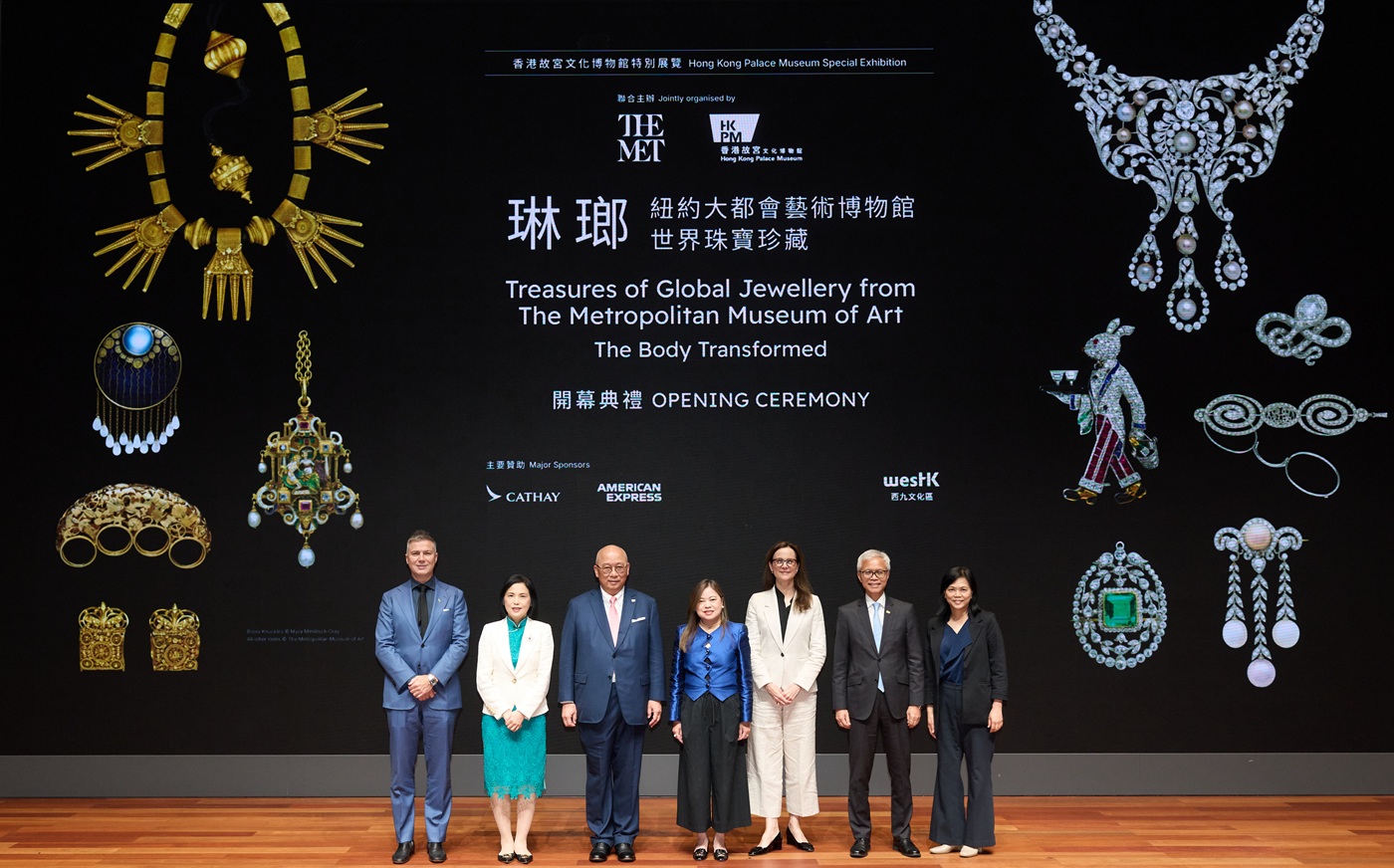
The Hong Kong Palace Museum (HKPM or the Museum) and The Metropolitan Museum of Art (The Met) in New York today jointly unveiled “Treasures of Global Jewellery from The Metropolitan Museum of Art: The Body Transformed” (“Treasures of Global Jewellery”), marking The Met’s first major travelling showcase of its jewellery collection, with Hong Kong as the first stop. As the first major exhibition in Hong Kong dedicated to the sweeping narratives of jewellery and other human adornment, “Treasures of Global Jewellery” covers five continents and nearly 4,000 years of history from the second millennium BCE to the 21st century, celebrating jewellery as a universal medium of artistic and cultural expression. Opening from 15 April to 19 October 2026 in Gallery 8, the exhibition features around 200 dazzling masterpieces from The Met’s prestigious collection—presented in Hong Kong for the first time—complemented by significant works from the HKPM’s Mengdiexuan Collection, the Chris Hall Collection at the Hong Kong Palace Museum, and major loan from The ILLUMINATA Collection. Cathay and American Express are the Major Sponsors of the exhibition.
The opening ceremony was held today at the HKPM, officiated by Rosanna Law, Secretary for Culture, Sports and Tourism of the Government of the Hong Kong Special Administrative Region; Leo Kung, Chairman of the HKPM Board; Quincy Houghton, Deputy Director for Exhibitions and International Initiatives at The Metropolitan Museum of Art; Betty Fung, Chief Executive Officer of the West Kowloon Cultural District Authority; and Dr Louis Ng, Museum Director of the HKPM.
Cultivate cultural dialogue through the universality of jewellery
As one of the world’s leading cultural institutions, The Met houses an unparalleled collection of more than 1.5 million objects, spanning 5,000 years of artistic achievement and cultural exchange across civilisations. “Treasures of Global Jewellery” presents the finest works from this world-renowned collection, telling fascinating tales of world jewellery across disparate periods, places, and curatorial areas. Through this exhibition, the HKPM aims to celebrate creativity and cultivate cross-cultural dialogue that underscores the universality of jewellery, reflecting its commitment to bridging civilisations and connecting the past with the present.
Since opening, the HKPM has held successful jewellery, fashion and textile exhibitions and built two impressive collections of Chinese gold objects and textile, resonating with Hong Kong’s position as a jewellery and fashion hub. Prior to “Treasures of Global Jewellery”, the Museum presented highly acclaimed exhibitions, including “Cartier and Women” and “Radiance: Ancient Gold from the Hong Kong Palace Museum Collection and the Mengdiexuan Collection” in 2023, “The Adorned Body: French Fashion and Jewellery 1770–1910 from the Musée des Arts Décoratifs, Paris” in 2024, and “A History of China in Silk: The Chris Hall Collection at the Hong Kong Palace Museum” in 2025.
Leo Kung, Chairman of the HKPM Board, said, “‘Treasures of Global Jewellery’ exemplifies the Hong Kong Palace Museum’s longstanding commitment to international cultural exchange and marks a significant milestone as the debut travelling presentation of The Met’s celebrated jewellery collection, with Hong Kong as its first stop. The exhibition underscores the HKPM’s dedication to serving as a vital platform where artistic traditions from global civilisations converge, and reflects Hong Kong’s unique role as an East-meets-West centre for international cultural exchange.”
Mr Kung also expressed gratitude to The Met for their trust; major sponsors, Cathay and American Express, for their generous support; Ms Betty Lo and Mr Kenneth Chu for donating the exquisite Mengdiexuan gold ornament collection; the Chris Hall Collection and the ILLUMINATA Collection for their loans; and design master Mr Alan Chan for his artistic direction of the exhibition’s design.
Quincy Houghton, Deputy Director for Exhibitions and International Initiatives, The Metropolitan Museum of Art in New York, said, “We’re pleased to collaborate with the Hong Kong Palace Museum on this important exhibition, which brings The Met’s expansive and encyclopaedic jewellery collection abroad for the first time. With this exhibition, we hope to not only extend the global reach of The Met collection, but also to invite new perspectives on jewellery as a deeply personal and meaningful form of art.”
Dazzling jewellery telling fascinating tales across time and cultures
“Treasures of Global Jewellery” is presented in five thematic sections: “The Divine Body: Gold Ornaments”, “The Regal Body: Royal Jewellery”, “The Transcendent Body: Jewellery and Beliefs”, “The Alluring Body: Jewellery as Art”, and “The Resplendent Body: Materials, Techniques, and Innovation”. Each section illuminates a distinct dimension of adornment, inviting visitors to marvel at the ways humans have embellished themselves from head to toe—as an expression of belief, status, and aesthetic ideals across cultures and geographies.
The introductory section, “The Adorned Body”, introduces a curated selection of highlights presented in a progression that follows the contours of the human body. From the 1,251 gold rings (about 1887–1813 BCE) that once adorned the ceremonial wig of Egyptian princess Sithathoryunet, daughter of the Pharaoh Senwosret II, to the delicate Art Nouveau necklace (about 1897–1899) by French master glassmaker René-Jules Lalique, this section foregrounds jewellery’s intrinsic relationship with the human form.
The first section of the exhibition, “The Divine Body: Gold Ornaments”, explores how ancient civilisations from Egypt and the Americas to China utilised jewellery to capture, activate, and embody the divine. At the entrance, a compelling visual dialogue unfolds between a gold headdress with animals (4th to 3rd century BCE) from the HKPM’s Mengdiexuan Collection and a Colombian headdress ornament (1st to 7th century BCE), highlighting the shared symbolic power and spiritual resonance of gold across cultures, and its enduring role in mediating humanity’s relationship with the realm of the gods.
From elaborate parures to ceremonial adornments, the second section of the exhibition, “The Regal Body: Royal Jewellery”, examines how jewellery associated with royalty and court life has been employed across cultures to articulate rank, authority, and status. A European tiara with oak leaves and acorns (transformable into three brooches) (c.1840–1850) from The ILLUMINATA Collection reveals the visual language of sovereignty and splendour. To enrich the visitor experience, a multimedia AR station invites visitors to virtually try on the tiara with oak leaves and acorns, offering an interactive experience of the jewellery’s transformative power.
The third section of the exhibition, “The Transcendent Body: Jewellery and Beliefs”, explores how jewellery has served as a bridge between the human and the divine—whether by conjuring spirits, appeasing gods, or asking for divine protection. Among the highlights are Nepalese ear ornaments for a deity (17th to 19th century) and a Byzantine necklace (6th to 7th century) with amethysts, glass, and gold beads, which vividly illustrates jewellery’s role in giving tangible form to faith, ritual, and spiritual aspiration.
The fourth section of the exhibition, “The Alluring Body: Jewellery as Art”, examines the complex role of jewellery in crafting the alluring female body. From the shimmering emerald-and-diamond brooch (around 1900) likely crafted by Tiffany & Co. to subversive surrealist accoutrements and dazzling creations by renowned houses and designers—such as Cartier, Schiaparelli, and Alexander McQueen—these works are showcased alongside bold contemporary and avant-garde pieces, uncovering how jewellery has both reinforced and challenged conventional notions of beauty. Among the highlights are Sam Kramer’s biomorphic eye brooch (c.1950) and Alexander Calder’s sculptural necklace, The Jealous Husband (1940).
The fifth section of the exhibition, “The Resplendent Body: Materials, Techniques, and Innovation”, concludes the exhibition with statement jewellery that celebrates the spectacle of adornment, from the value of materials to the virtuosity of craftsmanship. Tracing the evolution of jewellery-making materials and techniques, this section highlights a festive headdress with butterflies and flowers (Qing dynasty, 19th century) from the Chris Hall Collection at the HKPM, distinguished by its traditional ornamentation technique of kingfisher feather inlay. Giorgio di Sant’Angelo’s evening ensemble (1987–1988) embodies an experimental approach, blurring the line between jewellery and garment.
An immersive journey to explore global jewellery, collaboration with internationally acclaimed local artist, and engaging learning experiences
The exhibition presents a mesmerising and theatrical jewellery-scape with a symphony of colours, sounds, and moods. One section is transformed into a “gold room”, showcasing glittering gold jewellery, a gold mosaic floor, and walls with gold wallpaper. Internationally acclaimed Hong Kong designer and artist Alan Chan has provided artistic direction for the exhibition’s design. Chan’s signature “jewellery monograms” help accentuate the key objects and sections.
The HKPM’s distinctive gallery design will also be complemented by a suite of innovative multimedia features that offer a fresh interpretation of this travelling exhibition. Throughout the exhibition, augmented-reality booths invite visitors to virtually try on three signature jewellery pieces, creating an immersive encounter with jewellery’s transformative power. An additional interactive multimedia zone further heightens engagement with a short quiz that pairs visitors with a resonant object from The Met’s collection, enriching their connection with the exhibition’s narratives.
For those interested in learning more deeply about individual objects, the Museum offers a Curator-led Audio Tour, featuring some of the most magnificent jewellery pieces handpicked and narrated by the HKPM’s curators. In addition, a public talk by Dr Melanie Holcomb, Curator and Manager of Collection Strategy of Medieval Art and The Cloisters at The Met, will take place at the HKPM on 15 April 2026, offering deeper insights into jewellery’s profound connection with the human body. Other learning experiences include guided tours, family workshops, and jewellery try-ons. Details will be announced in due course.
“Treasures of Global Jewellery from The Metropolitan Museum of Art: The Body Transformed” will be open to the public from 15 April 2026 to 19 October 2026 in Gallery 8 of the HKPM. Tickets for this special exhibition, which also grant access to all the thematic exhibitions in Galleries 1–7, are priced at HK$150 for adults and HK$75 for concessions*. Full Access Tickets, priced at HK$250 for adults and HK$125 for concessions*, include access to the thematic exhibitions (Galleries 1–7) and special exhibitions (Galleries 8 and 9). “Ancient Egypt Unveiled: Treasures from Egyptian Museums” is now on view in Gallery 9 and will run until 31 August 2026. American Express Cardmembers can enjoy an exclusive 5% discount on the regular price on Special Exhibition Ticket (Galleries 1-7 & 8) through the Cityline website and mobile app, or at the museum ticketing counter.
Visitors can pre-book a Public Guided Tour of this special exhibition priced at HK$300 for adults and HK$150 for concessions*. The tour lasts approximately 45 minutes and includes a “Treasures of Global Jewellery” Special Exhibition ticket. Availability is on a first-come, first-served basis.
Tickets are now available for sale or reservation through the West Kowloon Cultural District’s online ticketing platforms and ticketing partners, as well as the WestK Ticketing WeChat mini program. Please refer to the HKPM website for more information.
*Concessions are available to children aged 7 to 11, full-time students, seniors aged 60 and above, persons with disabilities (with one companion), and CSSA recipients. Free entry for children aged 6 and under.
Remarks
About the Hong Kong Palace Museum
Through innovative curatorial approaches, the Hong Kong Palace Museum presents priceless treasures from the Palace Museum along with the finest collections from other world-renowned institutions. The Museum is also in the process of building its own world-class collection. Opened in 2022, the Museum is a leading institution for the study and appreciation of Chinese art and culture and the promotion of dialogue among world civilisations. The Museum is a collaborative project between the West Kowloon Cultural District Authority and the Palace Museum. The Hong Kong Jockey Club Charities Trust made a donation of HK$3.5 billion for its establishment, as well as some of the annual exhibitions and education programmes in 2023–2032.
Through research, exhibitions, publications, and educational and professional exchange programmes, the Museum builds international partnerships and positions Hong Kong as a global hub for art and culture. A resource that belongs to the local community, the Museum inspires community engagement, fosters dialogue, and promotes creativity and interdisciplinary collaboration.
About the West Kowloon Cultural District (WestK)
WestK is one of the largest and most ambitious cultural hubs in the world and Hong Kong’s new cultural tourism landmark, spanning 40 hectares alongside Victoria Harbour. WestK comprises a mix of landmark arts and cultural facilities, including world-class museums M+ and the Hong Kong Palace Museum, intricately designed performing arts venues the Xiqu Centre and Freespace, the 11-hectare Art Park with a waterfront promenade, and the upcoming WestK Performing Arts Centre.
Hosting over 1,000 exhibitions, performances, programmes, and events each year, WestK provides a vital platform for both emerging and established artists. WestK welcomes more than 10 million visitors each year, evolving as the international cultural brand of Hong Kong and strengthening the city’s strategic role as an East-meets-West centre for international cultural exchange.
https://www.westk.hk
About the Metropolitan Museum of Art
The Metropolitan Museum of Art was founded in 1870 by a group of American citizens—businessmen and financiers as well as leading artists and thinkers of the day—who wanted to create a museum to bring art and art education to the American people. Today, The Met displays tens of thousands of objects covering 5,000 years of art from around the world for everyone to experience and enjoy. The Museum lives in two iconic sites in New York City—The Met Fifth Avenue and The Met Cloisters. Millions of people also take part in The Met experience online. Since its founding, The Met has always aspired to be more than a treasury of rare and beautiful objects. Every day, art comes alive in the Museum’s galleries and through its exhibitions, events and educational programs, revealing both new ideas and unexpected connections across time and across cultures. The Met presents over 29,000 educational events and programs throughout the year to make art accessible to everyone, regardless of background, disability, age, or experience.
https://www.metmuseum.org/