

Hong Kong Palace Museum |

Map

Hong Kong Palace Museum

West Kowloon Cultural District, 8 Museum Drive, Kowloon


Mon, Wed, Thu & Sun
10:00 am–06:00 pm
Fri, Sat & Public Holiday
10:00 am–08:00 pm | Closed on Tuesdays (except public holidays) & the first two days of the Lunar New Year
2024-2025 web-accessibility.hk GOLD Award 2024-2025 web-accessibility.hk elderly friendly

Copyright © Hong Kong Palace Museum. All rights reserved
Important notice
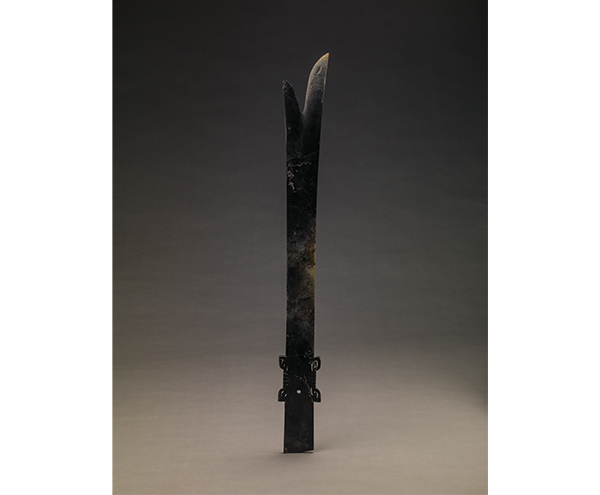
Zhang-sceptre
Zhang-sceptre
About 1300–1100 BCE
Jade
Pit 2 of Sanxingdui site
Sanxingdui Museum, 000184
© Sichuan Provincial Institute of Cultural Relics and Archaeology

Zhang-sceptre

In 1986, seventeen jade zhang-sceptres were excavated from pit 2, all of which had been burned before being deposited. This piece, made of altered dolomite, is black except for some whitish parts where it was exposed to fire. Both sides have relatively flat surfaces, and the tip is forked. The lower section is framed by slightly widened and inward curling scrolls and teeth. There is a round hole (diam. 0.7 cm) on the tang. Studying the engraved patterns on other excavated jade sceptres and the bronze figure holding a zhang-sceptre leads to further speculations on how these artefacts were used. In pit 7, a bronze dragon-shaped object in the shape of a dragon has a zhang-sceptre on its head.

Research shows that these sceptres underwent several stages of dispersal in East Asia. Prototypes and earlier examples of sceptres were found in the Longshan and Erlitou cultures in the Central Plains. Following the Sanxingdui culture, jade zhang-sceptres appeared at Jinsha, testifying to their long-lasting significance on the Chengdu Plain during the Bronze Age.

Top
Hong Kong Palace Museum
Map

Hong Kong Palace Museum

West Kowloon Cultural District, 8 Museum Drive, Kowloon


Mon, Wed, Thu & Sun
10:00 am–06:00 pm
Fri, Sat & Public Holiday
10:00 am–08:00 pm | Closed on Tuesdays (except public holidays) & the first two days of the Lunar New Year