- Adopting a polyvocal curatorial approach, the exhibition features around 150 masterpieces tracing over a millennium of artistic exchange and transmission of Buddhist art across Asia, illuminating the Silk Roads as a dynamic network of interaction and celebrating a shared artistic and cultural heritage that continues to resonate with audiences today.
- Cutting-edge digital presentations bring iconic Buddhist monuments—including the Bamiyan Buddhas and Seokguram Grotto—to life as seen through the eyes of legendary pilgrims.
The Hong Kong Palace Museum (HKPM or the Museum) is proud to announce the landmark special exhibition, “GS Charity Foundation Presents: Cultural Exchange and Buddhist Art along the Silk Roads” (“Cultural Exchange and Buddhist Art along the Silk Roads”), on view from 11 December 2026 to 5 May 2027 in Gallery 8. Presented by GS Charity Foundation, the exhibition is jointly organised by the HKPM and The Guimet–National Museum of Asian Arts, France (Guimet Museum), with support from the Uzbekistan Art and Culture Development Foundation. This exhibition traces more than a millennium of artistic convergence and cross-cultural dialogue that shaped the development of Buddhist art along the Silk Roads, illuminating how Buddhist art evolved into one of Asia’s enduring and profoundly impactful forms of artistic tradition.
A multifaceted tapestry of Asian masterpieces
Bringing together around 150 exceptional works of art from international and local holdings, the exhibition adopts a polyvocal curatorial approach that highlights diverse Asian perspectives. In addition to over 100 masterpieces from the Guimet Museum’s collection, the exhibition will be enriched by significant loans from the State Museum of History of Uzbekistan and stellar contributions from Hong Kong institutions including the Antiquities and Monuments Office, the Art Museum of The Chinese University of Hong Kong, The Chris Hall Collection at the HKPM, the Hong Kong Museum of Art, and the Tsz Shan Monastery Buddhist Art Museum. By placing global and local collections in conversation, the exhibition underscores the HKPM’s positioning as a global cultural connector and a dynamic bridge between world civilisations.
As the 5th exhibition in the Museum’s World Cultures series and building on acclaimed international collaborations, this exhibition marks another milestone in the HKPM’s efforts to foster dialogue among world civilisations through exceptional works of art and material culture.
Tracing a millennium of artistic exchange across Asia through Buddhist art
Spanning from the 1st to the 10th centuries, the exhibition follows the spread of Buddhist art in disparate cultural contexts along the Silk Roads, from the Gandhara region, a crossroads of ancient South and Central Asia, to China, the Korean Peninsula, Japan, and Southeast Asia. Visitors will embark on an immersive journey across time and space through around 150 treasures including sculptures, textiles, ivory carvings, glassware, and goldwork, enhanced by immersive multimedia projections and gallery designs.
Key themes and exhibition highlights include:
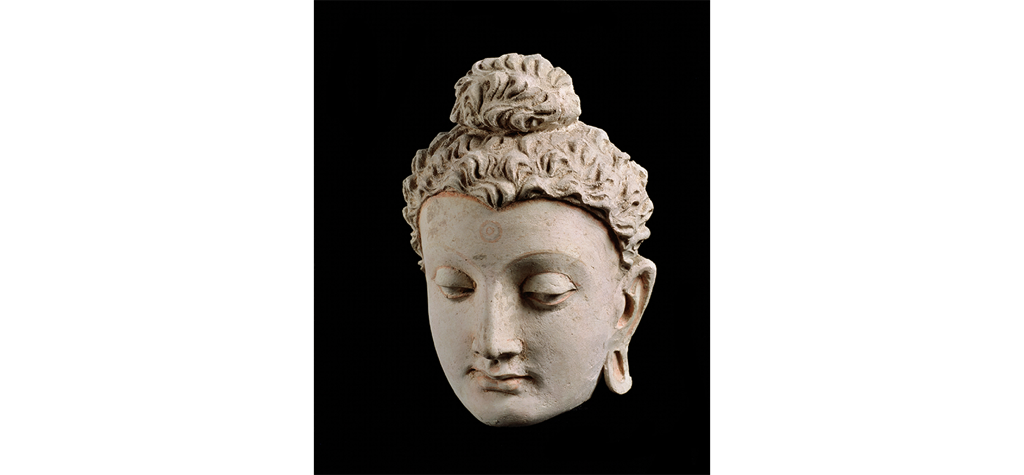
- Convergence of multiple artistic traditions in Gandhara: Located in present-day northwestern Pakistan and eastern Afghanistan, Gandhara emerged as a remarkable centre of cultural encounter, where ancient Iranian, Greek, Central Asian, and Indian cultures converged to create a distinctive artistic style. Highlights such as the Standing Bodhisattva Maitreya (2nd–3rd century) and The Miracle at Shravasti stone carving (3rd–5th century) shed light on the interconnected cultural landscape across the Gandharan region, where profound cultural exchanges established artistic models that shaped Buddhist art across Asia for centuries.
- Cultural and spiritual exchange along the Silk Roads: Merchants, monks, artists, and emissaries travelled along the Silk Roads, where vibrant commercial hubs facilitated the exchange of religious ideas and artistic conventions. Highlights such as the Seated Bodhisattva Avalokiteshvara (7th–8th century) from Kabul, Afghanistan, and the Thousand-armed Avalokiteshvara from Korea’s Goryeo dynasty (918–1392) showcase how the images of Avalokiteshvara, the Bodhisattva of Infinite Compassion, were transmitted across the continent and reinterpreted through local artistic sensibilities and contexts, resulting in distinctive regional expressions while retaining a shared spiritual foundation.
- Dynamic evolution of Buddhist art in China: By the 5th to 6th centuries, during the Northern and Southern dynasties (420–589), Buddhist communities had become firmly established in China. Local adaptations of foreign Buddhist art forms gave rise to varied regional styles and forms, such as the Eastern Wei White marble figure of Guanyin (541) and Northern Qi Pensive Bodhisattva (550–577), which are representative of the transformations during this era. The Tang Pillar inscribed with the Uṣṇīṣa Vijaya Dhāraṇī Sūtra (853) and Liao Seated Guanyin Bodhisattva (907–1125) exemplify the continuous development of Buddhist art in China, adapting to local traditions and beliefs.
Bringing the legacy of historic Buddhist monuments to life through technology
The exhibition is further enhanced by a series of innovative digital and interpretive experiences that offer new perspectives on the artistic and cultural worlds connected by the Silk Roads. Developed in collaboration with the AI Graduate School at the Korea Advanced Institute of Science and Technology (KAIST), large-scale digital reconstructions of the Bamiyan Buddhas in Afghanistan and the Seokguram Grotto in Korea invite visitors to encounter two of Asia’s most celebrated Buddhist monuments through cutting-edge technology. Inspired by the journeys of the famous pilgrims Xuanzang (602–664) and Hyech’o (704–787), these digital projections recreate historic sites of Buddhist devotion, artistic achievement, and cultural exchange, offering audiences new ways to explore the lasting legacies of Silk Roads.
To complement the exhibition, the HKPM will present a series of public programmes and educational activities exploring Buddhist art, pilgrimage, and cultural exchange across Asia. Further details will be announced in due course.
Ticketing and visitor information
“GS Charity Foundation Presents: Cultural Exchange and Buddhist Art along the Silk Roads” will run from 11 December 2026 to 5 May 2027 in Gallery 8 of the HKPM. Tickets for this winter special exhibition, which also grant access to all thematic exhibitions through Galleries 1–7, are priced at HK$150 for adults and HK$75 for concessions*.
Tickets are now available for sale or reservation through the West Kowloon Cultural District’s online ticketing platforms and ticketing partners, as well as the WestK Ticketing WeChat mini program. Please refer to the HKPM website for more information.
* Concessions are available to children aged 7 to 11, full-time students, seniors aged 60 and above, persons with disabilities (with one companion), and CSSA recipients. Free entry for children aged 6 or under.
Remarks
About the Hong Kong Palace Museum
Through innovative curatorial approaches, the Hong Kong Palace Museum presents priceless treasures from the Palace Museum along with the finest collections from other world-renowned cultural institutions. The Museum is also actively building up its own collection. Opening in 2022, the Museum is a leading institution for the study and appreciation of Chinese art and culture and the promotion of dialogue among world civilisations. The Museum is a collaborative project between the West Kowloon Cultural District Authority and the Palace Museum. The Hong Kong Jockey Club Charities Trust donated HK$3.5 billion to fund the construction of the museum and part of its annual exhibitions and educational programmes from 2023 to 2032.
Through research, exhibitions, publications, and educational and professional exchange programmes, the Museum builds international partnerships and positions Hong Kong as a global hub for art and culture. A resource that belongs to the local community, the Museum inspires community engagement, fosters dialogue, and promotes creativity and interdisciplinary collaboration.
About the West Kowloon Cultural District (WestK)
WestK is one of the largest and most ambitious cultural hubs in the world and Hong Kong’s new cultural tourism landmark, spanning 40 hectares alongside Victoria Harbour. WestK comprises a mix of landmark arts and cultural facilities, including world-class museums M+ and the Hong Kong Palace Museum, intricately designed performing arts venues such as the Xiqu Centre, Freespace, and the WestK Performing Arts Centre to be opened in 2027, as well as the 11-hectare Art Park with a waterfront promenade.
Hosting over 1,000 exhibitions, performances, programmes, and events each year, WestK provides a vital platform for both emerging and established artists. WestK welcomes more than 17 million visitors in 2025, evolving as the international cultural brand of Hong Kong and strengthening the city’s strategic role as an East-meets-West centre for international cultural exchange.
https://www.westk.hk/
About The Guimet–National Museum of Asian Arts, France
Founded in 1889, the Guimet houses the world’s most comprehensive collection of Asian arts, and the largest in Europe. With over 60,000 works spanning 7,000 years of history, its prestigious collections extend from Afghanistan to Japan, via India, China, Korea and South-East Asia. With paintings, sculptures, porcelain, prints, textiles, photographs, furniture and precious objects, the Guimet invites visitors on an extraordinary journey across Asia to discover its cultures, religions and schools of thought.
The Guimet–National Museum of Asian Arts, France comprises three sites in Paris’s 16th arrondissement. The historic building on Place d’Iéna features 5,500 m² of permanent exhibition spaces, a splendid historic library, a 276-seat auditorium hosting a rich programme of concerts, films, performances, lectures and literary events, a restaurant and a panoramic terrace. Each year, the museum presents four to five temporary exhibitions, regular rotations within its permanent collections, and interventions by contemporary artists.
Located just a stone’s throw from the museum, Maison Guimet houses part of the collection of imperial furniture and a selection of works dedicated to the art of tea in Asia. By 2030, the site will undergo a major transformation to become Villa Guimet, an International Centre for Research on Asian Arts.
The third venue, the Hôtel d’Ennery, invites visitors on a journey through a 19th-century cabinet of art and curiosities. Thanks to a public-private partnership, it will house by 2028 the largest collection dedicated to Japan and Japonism in Europe.
https://www.guimet.fr/en
About GS Charity Foundation
With a steadfast will to repay society and to create greater benefit for all, Glorious Sun Group established “GS Charity Foundation” in 2005. Through its own programmes and by supporting other charitable organisations, the Foundation strives to achieve its objectives of poverty and disaster relief, building schools, nurturing talents and promoting Chinese culture.