Hong Kong Palace Museum | Brilliance: Ming Dynasty Ceramic Treasures from the Palace Museum, 1368–1644

Map

Hong Kong Palace Museum

West Kowloon Cultural District, 8 Museum Drive, Kowloon


Mon, Wed, Thu & Sun
10:00 am–06:00 pm
Fri, Sat & Public Holiday
10:00 am–08:00 pm | Closed on Tuesdays (except public holidays) & the first two days of the Lunar New Year
2024-2025 web-accessibility.hk GOLD Award 2024-2025 web-accessibility.hk elderly friendly

Copyright © Hong Kong Palace Museum. All rights reserved
Important notice
x

Home Exhibitions

Brilliance: Ming Dynasty Ceramic Treasures from the Palace Museum, 1368–1644

01.07.2026 – 02.01.2028
Gallery 3
Brilliance: Ming Dynasty Ceramic Treasures from the Palace Museum, 1368–1644
01.07.2026 – 02.01.2028
Gallery 3

The Chinese ceramics housed in the Palace Museum—unparalleled in volume, quality, and variety—are mainly inherited from the imperial collections of the Ming (1368–1644) and Qing (1644–1911) dynasties. This exhibition features over 100 representative Ming ceramic treasures from the collection of the Palace Museum. It is organised in three sections and explores the development and the outstanding achievements of ceramic production in form, glaze, and design in the early, mid-, and late Ming dynasty.

The Ming dynasty was a golden age of Chinese ceramics. The ceramics produced then are remarkable works of art, distinguished by their quality and diversity. They tell stories of the imperial court, technological advances, and cultural exchanges. Imperial kilns were founded at Jingdezhen in Jiangxi province in 1369 to produce pieces for the exclusive use of the court, which imposed strict control over the management of the kilns. As a result of imperial patronage, Ming emperors influenced porcelain production and style. Ming potters, continuing the legacy of their predecessors, perfected their craft and sought to break new ground. As powerful vehicles of cultural exchange, Ming ceramics were widely traded, admired, and copied, generating a craze for Chinese porcelains around the globe.

This exhibition is jointly organised by the Hong Kong Palace Museum and the Palace Museum.


Jointly organised by:

HKPM Palace Museum
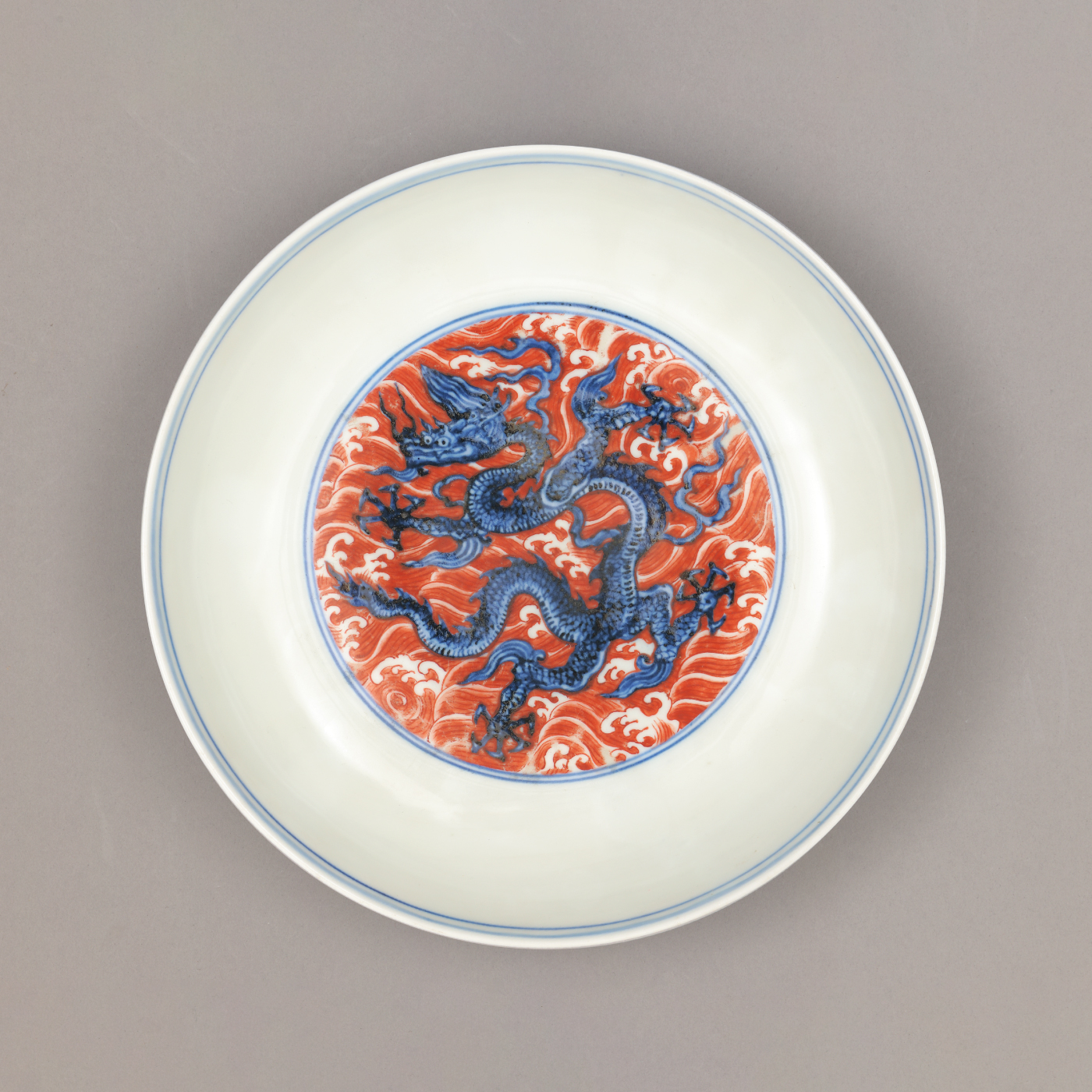
Dish with dragons among waves

Imperial Kilns, Jingdezhen, Jiangxi province
Dish with dragons among waves

Ming dynasty, Zhengtong period (1436–1449)
Porcelain with underglaze cobalt blue and overglaze iron-red enamel
The Palace Museum
© The Palace Museum

Highlighted objects

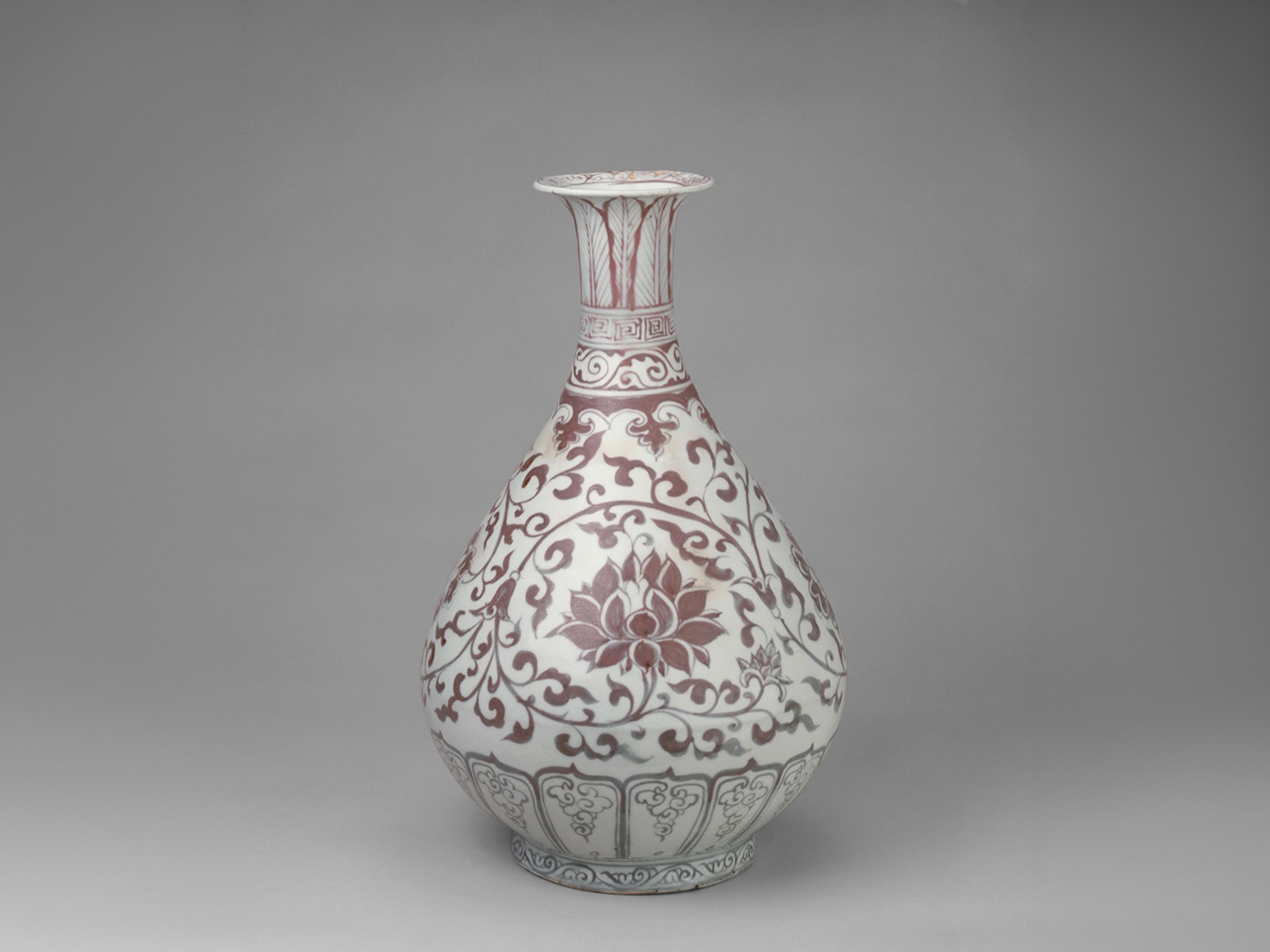
Pear-shaped vase with lotus scrolls

Pear-shaped vase with lotus scrolls

Imperial Kilns, Jingdezhen, Jiangxi province
Ming dynasty, Hongwu period (1368–1398)
Porcelain with underglaze copper-red
The Palace Museum
© The Palace Museum

Pear-shaped vase with lotus scrolls

Porcelains with underglaze copper-red decoration were first made in the Yuan dynasty and then developed during the Hongwu period of the early Ming dynasty. Although the tonality of the copper-oxide pigment on this Hongwu-period vase is more stable than that on Yuan dynasty pieces, the multilayered decoration is still typical of Yuan dynasty pieces. Both tonality and decoration are characteristic of ceramics of the transitional period from the Yuan dynasty to the Ming dynasty.

Pear-shaped vase with lotus scrolls

Imperial Kilns, Jingdezhen, Jiangxi province
Ming dynasty, Hongwu period (1368–1398)
Porcelain with underglaze copper-red
The Palace Museum
© The Palace Museum

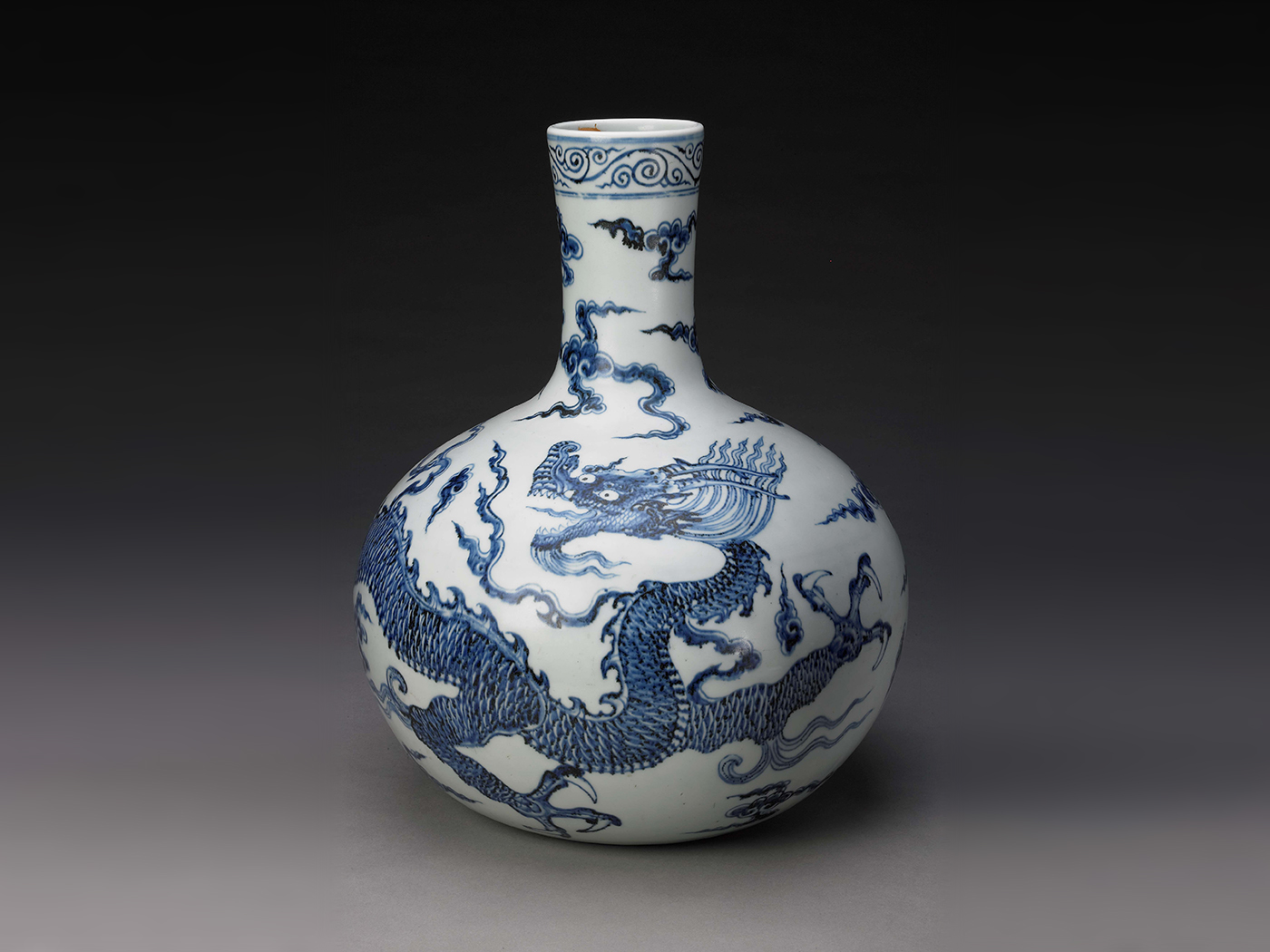
Globular vase with dragons among clouds

Globular vase with dragons among clouds

Imperial Kilns, Jingdezhen, Jiangxi province
Ming dynasty, Yongle period (1403–1424)
Porcelain with underglaze cobalt blue
The Palace Museum
© The Palace Museum

Globular vase with dragons among clouds

The imported cobalt pigment used by the imperial kilns in Jingdezhen was rich in iron, which created dark blue flecks when the wares were fired. The vase shows the close communications between the Ming government and the Western Asia.

Globular vase with dragons among clouds

Imperial Kilns, Jingdezhen, Jiangxi province
Ming dynasty, Yongle period (1403–1424)
Porcelain with underglaze cobalt blue
The Palace Museum
© The Palace Museum

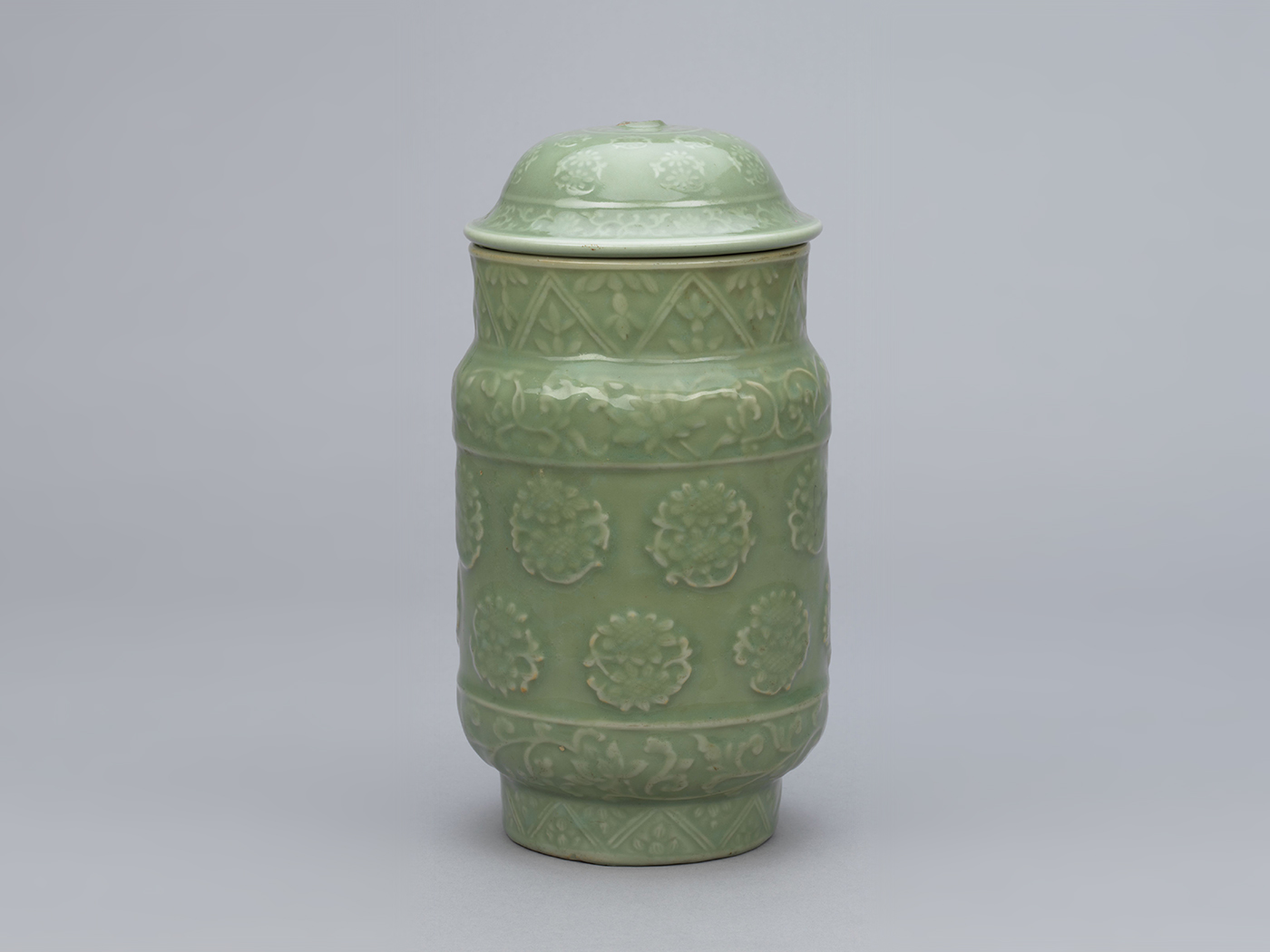
Lidded jar with lotus roundels

Lidded jar with lotus roundels

Longquan kilns, Zhejiang province
Ming dynasty, Yongle period (1403–1424)
Stoneware with celadon glaze
The Palace Museum
© The Palace Museum

Lidded jar with lotus roundels

In the early Ming dynasty, not just Jingdezhen but Longquan in Zhejiang province had official kilns governed by the court. Imperial ceramics produced in Longquan were made according to instructions from the court and have forms and designs remarkably similar to those of Jingdezhen wares. In addition to being supplied to the court in the early Ming dynasty, celadons made in Longquan kilns were carried on diplomatic missions to be used as the chief ceramic gifts. They were very popular in neighbouring countries and were also exported as far away as today’s Africa.

Lidded jar with lotus roundels

Longquan kilns, Zhejiang province
Ming dynasty, Yongle period (1403–1424)
Stoneware with celadon glaze
The Palace Museum
© The Palace Museum

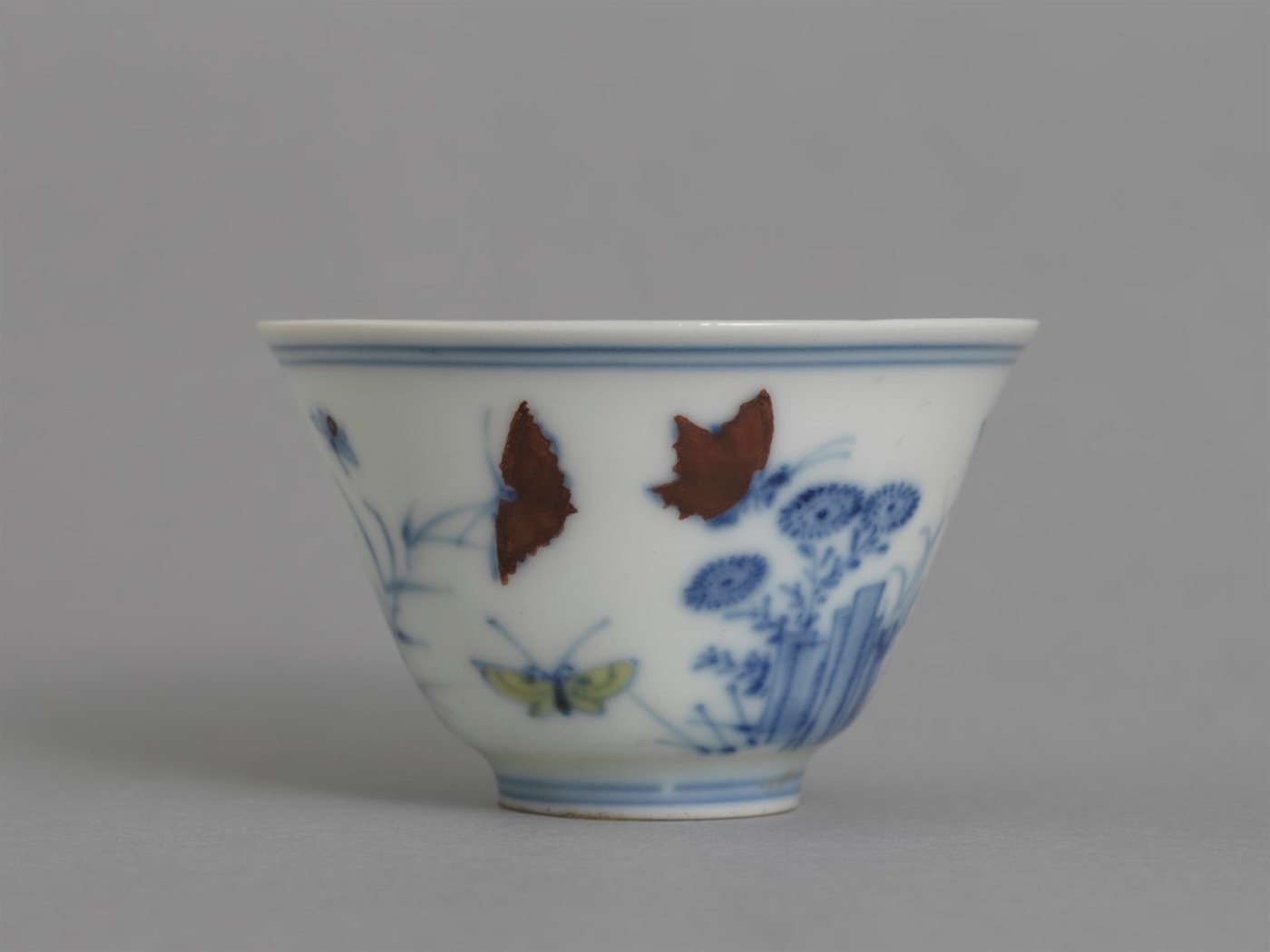
Cup with garden scenes in autumn

Cup with garden scenes in autumn

Imperial Kilns, Jingdezhen, Jiangxi province
Ming dynasty, Chenghua period (1465–1487)
Porcelain with underglaze cobalt blue and overglaze enamels
The Palace Museum
© The Palace Museum

Cup with garden scenes in autumn

Doucai is a technique that has already reached maturity during the Chenghua period. This cup with garden scenes in autumn is one of the finest pieces of doucai, It has a thin and light body, and the colour is vibrant. On the exterior are paintings of rocks, flowers, and colourful dancing butterflies, vividly capturing the scene of an autumn courtyard. This type of cup is usually called sanqiubei. While the name literally translates as “three autumn cup”, meaning the three months of autumn, which is the typical length of the season.

Take a closer look at the purple butterflies on the cup. The glaze used on their wings is rich in colour and has a dry, matte surface. This shade of purple is called chazi, unique to doucai of the Chenghua period.

Cup with garden scenes in autumn

Imperial Kilns, Jingdezhen, Jiangxi province
Ming dynasty, Chenghua period (1465–1487)
Porcelain with underglaze cobalt blue and overglaze enamels
The Palace Museum
© The Palace Museum

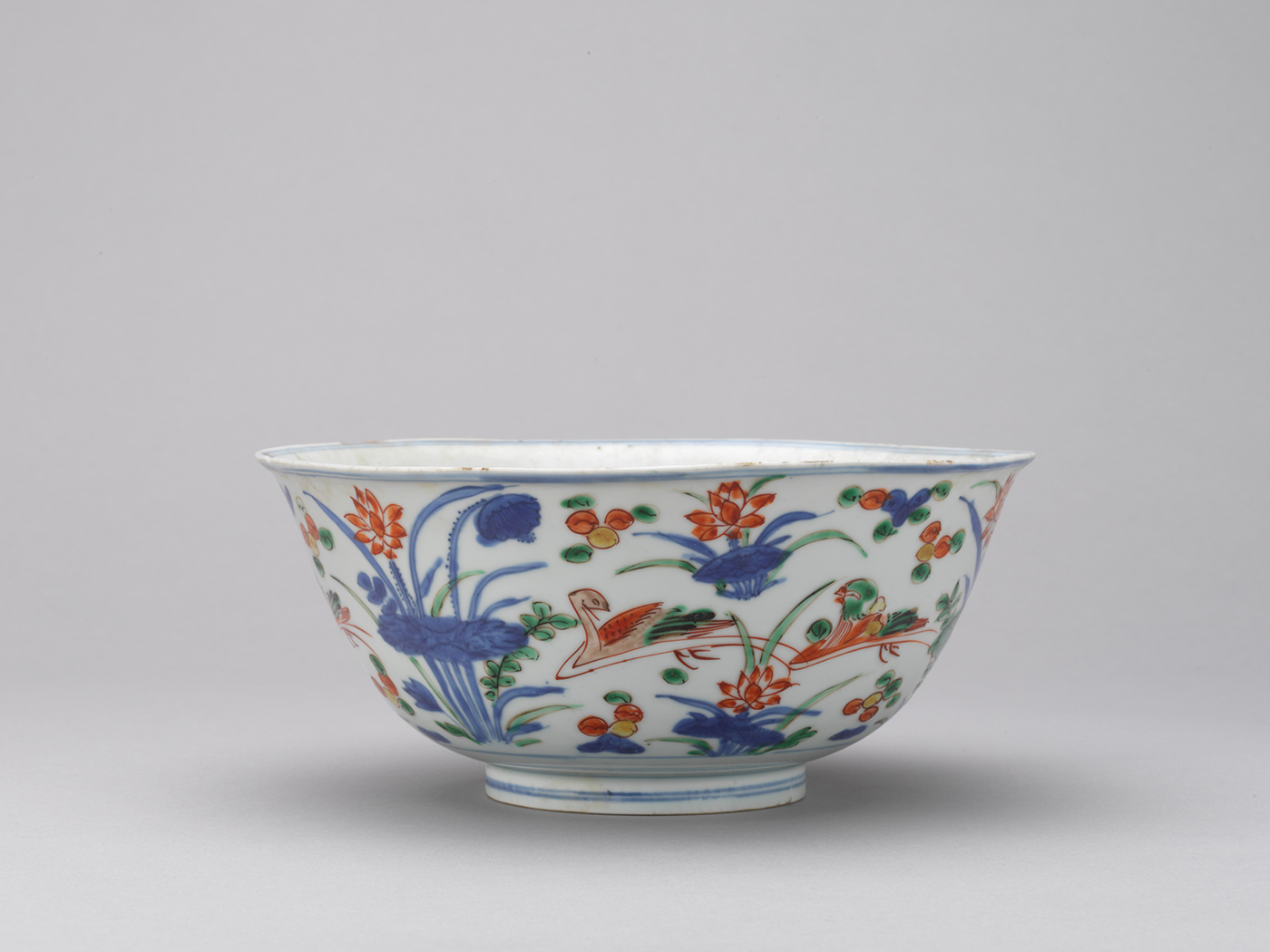
Bowl with mandarin ducks on a lotus pond and a Chenghua reign marks

Bowl with mandarin ducks on a lotus pond and a Chenghua reign marks

Imperial Kilns, Jingdezhen, Jiangxi province
Ming dynasty, Wanli period (1573–1620)
Porcelain with underglaze cobalt blue and overglaze enamels
The Palace Museum
© The Palace Museum

Bowl with mandarin ducks on a lotus pond and a Chenghua reign marks

Wucai (“five-colour”) porcelains originated during the Xuande period (1426–1435) of the Ming dynasty. This kind of wucai porcelain, which combines underglaze blue with overglaze polychrome enamels, was not produced on a large scale at the imperial kilns in Jingdezhen until the late Ming dynasty. The most representative examples were made during the Wanli period, renowned for their bright red and green enamels and lavishly decorated designs. Although the bowl decorated with mandarin ducks on a lotus pond bears a Chenghua reign mark, it was in fact produced during the Wanli period. This reflects the late Ming tendency to emulate and pay homage to masterpieces of earlier reigns.

Bowl with mandarin ducks on a lotus pond and a Chenghua reign marks

Imperial Kilns, Jingdezhen, Jiangxi province
Ming dynasty, Wanli period (1573–1620)
Porcelain with underglaze cobalt blue and overglaze enamels
The Palace Museum
© The Palace Museum

Become HKPM Friends

Enjoy unlimited visit to all thematic exhibitions

Join now

Stay connected

  • Stay tuned for upcoming events and other Museum news
  • Receive updates about your areas of interest
Top
Hong Kong Palace Museum
Map

Hong Kong Palace Museum

West Kowloon Cultural District, 8 Museum Drive, Kowloon


Mon, Wed, Thu & Sun
10:00 am–06:00 pm
Fri, Sat & Public Holiday
10:00 am–08:00 pm | Closed on Tuesdays (except public holidays) & the first two days of the Lunar New Year