1000. Exhibition introduction
1000. Exhibition introduction
For more than five millennia, Chinese civilisation has developed continuously, shaped by a long tradition of cultural openness and dynamism. These enduring qualities have sustained the vitality of Chinese society and culture across time. The Ming (1368–1644) and Qing (1644–1911) dynasties inherited the established systems of governance and moral lineage of earlier periods. Through diplomacy and trade, they engaged with a wide range of regions and communities, encouraging dialogue, exchange, and mutual understanding across cultures. As the imperial palace of the Ming and Qing dynasties, the Forbidden City not only served as the centre of political power but also provided a platform for interactions between China and the wider world. Its architecture, artefacts, and stories carry the imprint of history, and its history attests to more than five centuries of cross-cultural encounters, involving the flow of goods, technologies, arts, ideas, and cultures. Together, these exchanges inspired creativity and transformation in world civilisations.
The exhibition is jointly organised by the Hong Kong Palace Museum and The Palace Museum, and is solely sponsored by The Hong Kong Jockey Club Charities Trust.
1000. Exhibition introduction
1000. Exhibition introduction
For more than five millennia, Chinese civilisation has developed continuously, shaped by a long tradition of cultural openness and dynamism. These enduring qualities have sustained the vitality of Chinese society and culture across time. The Ming (1368–1644) and Qing (1644–1911) dynasties inherited the established systems of governance and moral lineage of earlier periods. Through diplomacy and trade, they engaged with a wide range of regions and communities, encouraging dialogue, exchange, and mutual understanding across cultures. As the imperial palace of the Ming and Qing dynasties, the Forbidden City not only served as the centre of political power but also provided a platform for interactions between China and the wider world. Its architecture, artefacts, and stories carry the imprint of history, and its history attests to more than five centuries of cross-cultural encounters, involving the flow of goods, technologies, arts, ideas, and cultures. Together, these exchanges inspired creativity and transformation in world civilisations.
The exhibition is jointly organised by the Hong Kong Palace Museum and The Palace Museum, and is solely sponsored by The Hong Kong Jockey Club Charities Trust.
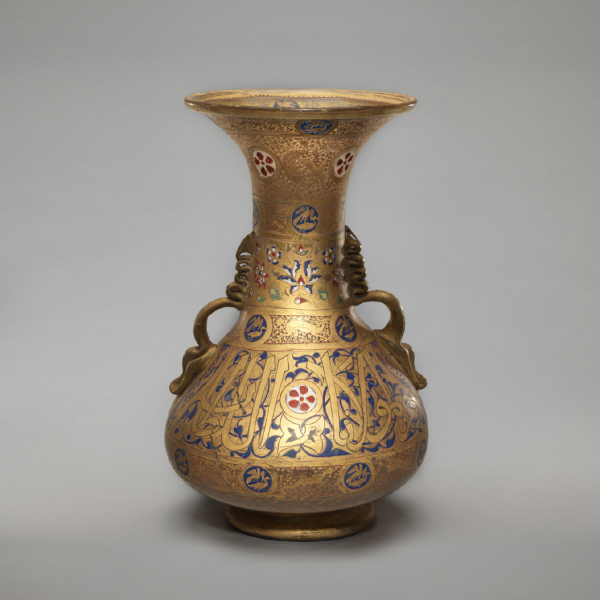
1001. Mosque lamp with a verse from the Qur’an
Mosque lamp with a verse from the Qur’an
Mamluk dynasty (1250–1517)
Glass with polychrome enamels and gilding
© The Palace Museum
1001. Mosque lamp with a verse from the Qur'an
This mosque lamp with a verse from the Qur’an came from the Mamluk Sultanate (1250–1517) ruling over the area around present-day Egypt and Saudi Arabia. Possibly used as an oil lamp in mosques, or other public buildings, it was produced using a glassblowing technique. This method originated in the region of Syria and Palestine and was introduced to China in the 5th century via Central Asia and exerted a profound influence on the development of local glassmaking craftsmanship. Moreover, the vessel is richly decorated with vivid colours in a typical Islamic style. Its body bears stylised Qur’anic inscriptions, while the base is adorned with four paired-bird roundels characteristic of 14th-century Islamic art.
The Mamluk Sultanate, at the height of its power in the 14th century, commanded the key routes of the Maritime Silk Routes. It controlled seaports on the Mediterranean and Red Seas and trading centres on land, creating the shortest and safest trade routes between Europe and Asia at the time. It facilitated commercial and cultural exchange across the region.
1001. Mosque lamp with a verse from the Qur’an
1001. Mosque lamp with a verse from the Qur'an
This mosque lamp with a verse from the Qur’an came from the Mamluk Sultanate (1250–1517) ruling over the area around present-day Egypt and Saudi Arabia. Possibly used as an oil lamp in mosques, or other public buildings, it was produced using a glassblowing technique. This method originated in the region of Syria and Palestine and was introduced to China in the 5th century via Central Asia and exerted a profound influence on the development of local glassmaking craftsmanship. Moreover, the vessel is richly decorated with vivid colours in a typical Islamic style. Its body bears stylised Qur’anic inscriptions, while the base is adorned with four paired-bird roundels characteristic of 14th-century Islamic art.
The Mamluk Sultanate, at the height of its power in the 14th century, commanded the key routes of the Maritime Silk Routes. It controlled seaports on the Mediterranean and Red Seas and trading centres on land, creating the shortest and safest trade routes between Europe and Asia at the time. It facilitated commercial and cultural exchange across the region.
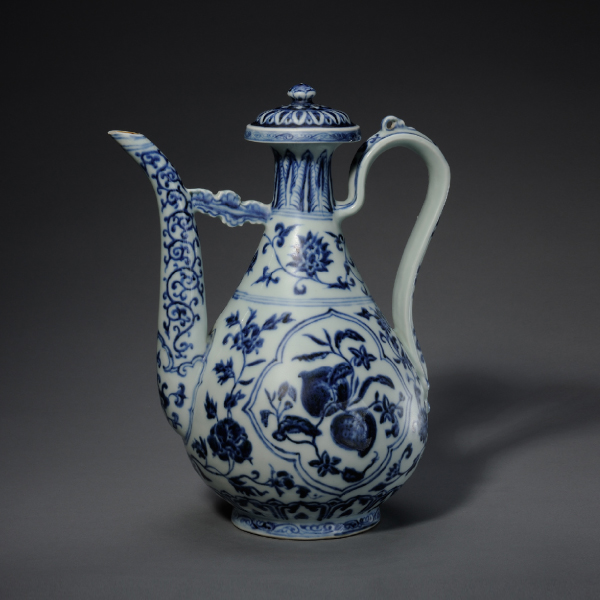
1002. Ewer with fruit sprays
Ewer with fruit sprays
Jingdezhen kilns
Ming dynasty, Xuande period (1426–1435)
Porcelain with underglaze cobalt blue
© The Palace Museum
1002. Ewer with fruit sprays
This blue-and-white ewer from the early 15th century of the Ming dynasty not only features a vessel form traceable to exchanges between Tang China and Central and West Asia, but is also a remarkable product of cultural exchange between Ming China and the Islamic world. The sapphire-like brilliance of its decoration owes much to an imported cobalt pigment called Samarra blue, or Sumali qing, which had been introduced to China as early as the 14th century during the Yuan dynasty. With the substantial increase of imports of the pigment during the Ming period, techniques for its application reached their height during the Xuande reign (1426–1435). The depth of blue achieved represented an artistic summit that was exceptionally difficult to replicate.
In the 15th century, Zheng He's maritime expeditions carried Chinese porcelain across the world as diplomatic gifts. The Islamic nations he visited were particularly drawn to the blue-and-white aesthetic and regarded the colours as symbols of purity and nobility. Demand from overseas markets, especially the Islamic world, drove a significant expansion in blue-and-white production at Jingdezhen, China's ceramic production centre.
Exchanges with the Islamic world also shaped the forms of Chinese blue-and-white ware. For instance, the watering can on display nearby was modelled on metalwork from Central and West Asia. Interestingly, Chinese blue-and-white porcelain also features prominently in many works of Islamic art, including the miniature paintings in the Shahnameh (Book of Kings), an important historical source for the study of Persian high society. The Shahnameh, which is regarded as an encyclopaedia of ancient Iranian life, shows that Ming blue-and-white porcelain was used in courts across the Islamic world, and also reflects the frequent exchanges between China and the Islamic world at the time.
1002. Ewer with fruit sprays
1002. Ewer with fruit sprays
This blue-and-white ewer from the early 15th century of the Ming dynasty not only features a vessel form traceable to exchanges between Tang China and Central and West Asia, but is also a remarkable product of cultural exchange between Ming China and the Islamic world. The sapphire-like brilliance of its decoration owes much to an imported cobalt pigment called Samarra blue, or Sumali qing, which had been introduced to China as early as the 14th century during the Yuan dynasty. With the substantial increase of imports of the pigment during the Ming period, techniques for its application reached their height during the Xuande reign (1426–1435). The depth of blue achieved represented an artistic summit that was exceptionally difficult to replicate.
In the 15th century, Zheng He's maritime expeditions carried Chinese porcelain across the world as diplomatic gifts. The Islamic nations he visited were particularly drawn to the blue-and-white aesthetic and regarded the colours as symbols of purity and nobility. Demand from overseas markets, especially the Islamic world, drove a significant expansion in blue-and-white production at Jingdezhen, China's ceramic production centre.
Exchanges with the Islamic world also shaped the forms of Chinese blue-and-white ware. For instance, the watering can on display nearby was modelled on metalwork from Central and West Asia. Interestingly, Chinese blue-and-white porcelain also features prominently in many works of Islamic art, including the miniature paintings in the Shahnameh (Book of Kings), an important historical source for the study of Persian high society. The Shahnameh, which is regarded as an encyclopaedia of ancient Iranian life, shows that Ming blue-and-white porcelain was used in courts across the Islamic world, and also reflects the frequent exchanges between China and the Islamic world at the time.
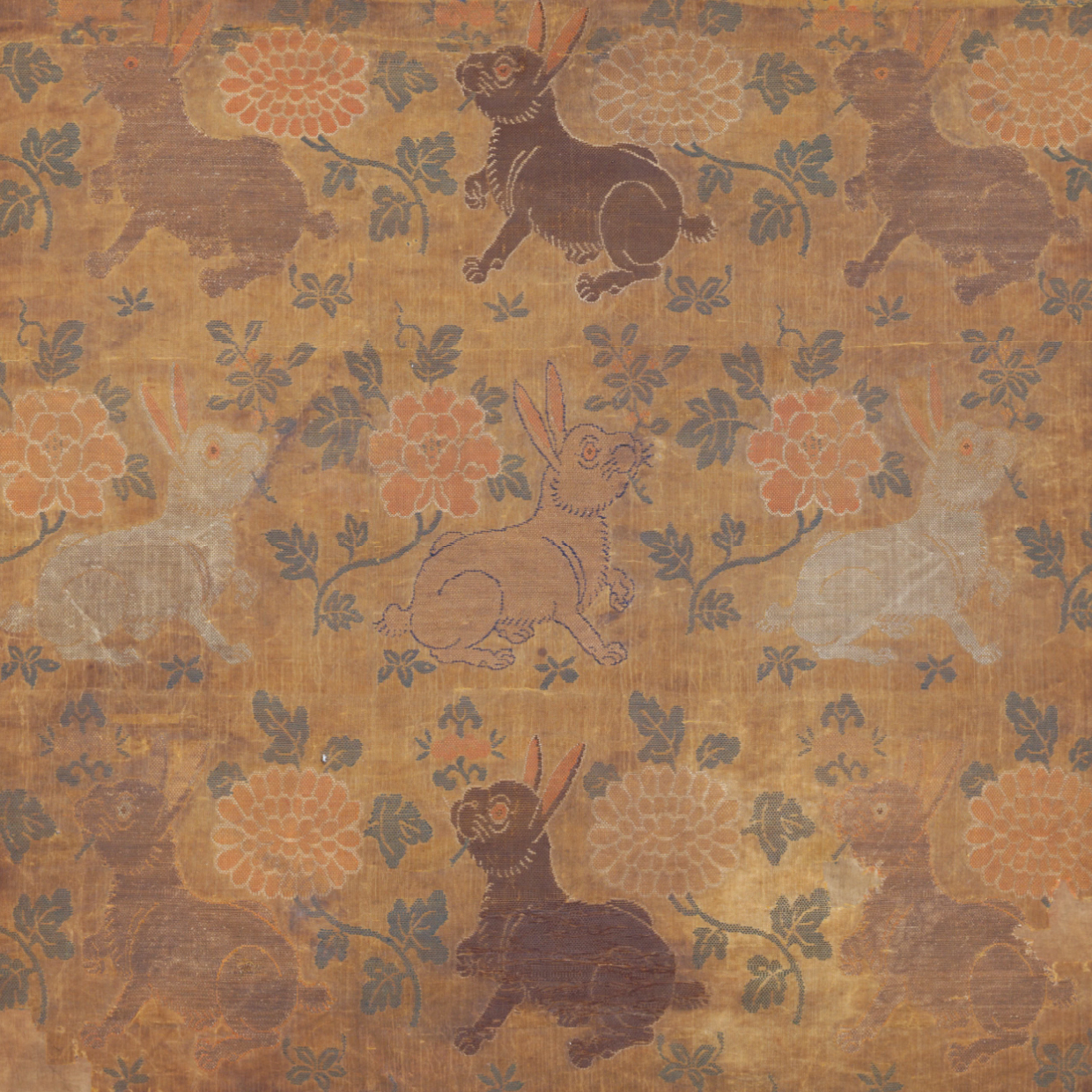
1003. Mounting fabric with rabbits holding a flower spray in their mouths
Mounting fabric with rabbits holding a flower spray in their mouths
Ming dynasty, Xuande period (1426–1435)
Gauze brocade
© The Palace Museum
1003. Mounting fabric with rabbits holding a flower spray in their mouths
Since the Han dynasty, which lasted from the 2nd century BCE to the 3rd century CE, silk has been one of China's most important exports. It was carried along the Silk Routes to Central Asia, West Asia, and Europe and was eventually embraced worldwide, becoming an iconic commodity and a form of currency.
The maritime expeditions of Zheng He in early 14th century brought Chinese silk to Southeast Asia, South Asia, and Africa. With both the overland and maritime Silk Routes flourishing on an unprecedented scale, China's connections with Asia, Europe and Africa deepened considerably. Diverse cultures and religious traditions encountered one another through trade, beginning a remarkable era of exchange between China and the wider world.
1003. Mounting fabric with rabbits holding a flower spray in their mouths
1003. Mounting fabric with rabbits holding a flower spray in their mouths
Since the Han dynasty, which lasted from the 2nd century BCE to the 3rd century CE, silk has been one of China's most important exports. It was carried along the Silk Routes to Central Asia, West Asia, and Europe and was eventually embraced worldwide, becoming an iconic commodity and a form of currency.
The maritime expeditions of Zheng He in early 14th century brought Chinese silk to Southeast Asia, South Asia, and Africa. With both the overland and maritime Silk Routes flourishing on an unprecedented scale, China's connections with Asia, Europe and Africa deepened considerably. Diverse cultures and religious traditions encountered one another through trade, beginning a remarkable era of exchange between China and the wider world.
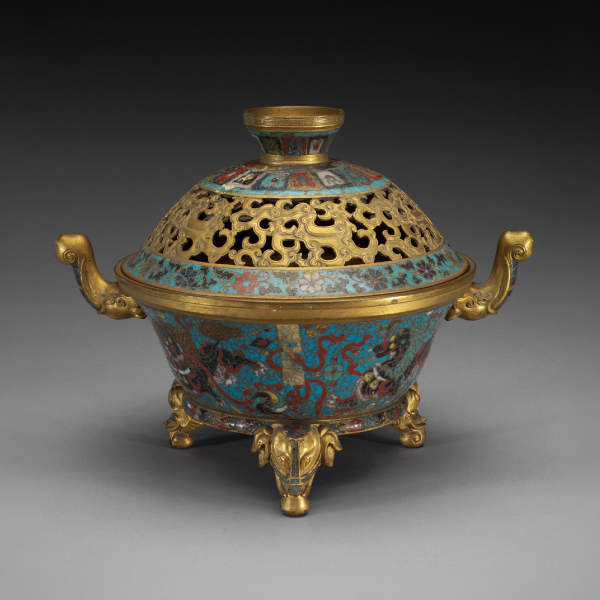
1004. Incense burner with lions playing with a ball and a Jingtai reign mark
Incense burner with lions playing with a ball and a Jingtai reign mark
Ming dynasty (1368–1644)
Cloisonné
© The Palace Museum
1004. Incense burner with lions playing with a ball and a Jingtai reign mark
The art of cloisonné enamel was introduced to China from West Asia via the Silk Routes in the 14th century during the Yuan dynasty. The technique involves shaping fine metal wires into decorative patterns, soldering them onto a metal body, and then filling the resulting cells with enamel powder and firing the piece. This cloisonné incense burner is decorated with lion motifs. Although the lion is not native to China, it was received as a diplomatic gift since the Han dynasty, which lasted from the 2nd century BCE to the 3rd century CE, when the lion was brought from the states from West Asia and Central Asia along the Silk Routes. In the early Ming period, when the dynasty was at the height of its power and both maritime and overland routes were flourishing, envoys from places like Herat and Samarkand travelled thousands of miles to present lions and other rare creatures to the court, which regarded them as auspicious omens.
1004. Incense burner with lions playing with a ball and a Jingtai reign mark
1004. Incense burner with lions playing with a ball and a Jingtai reign mark
The art of cloisonné enamel was introduced to China from West Asia via the Silk Routes in the 14th century during the Yuan dynasty. The technique involves shaping fine metal wires into decorative patterns, soldering them onto a metal body, and then filling the resulting cells with enamel powder and firing the piece. This cloisonné incense burner is decorated with lion motifs. Although the lion is not native to China, it was received as a diplomatic gift since the Han dynasty, which lasted from the 2nd century BCE to the 3rd century CE, when the lion was brought from the states from West Asia and Central Asia along the Silk Routes. In the early Ming period, when the dynasty was at the height of its power and both maritime and overland routes were flourishing, envoys from places like Herat and Samarkand travelled thousands of miles to present lions and other rare creatures to the court, which regarded them as auspicious omens.
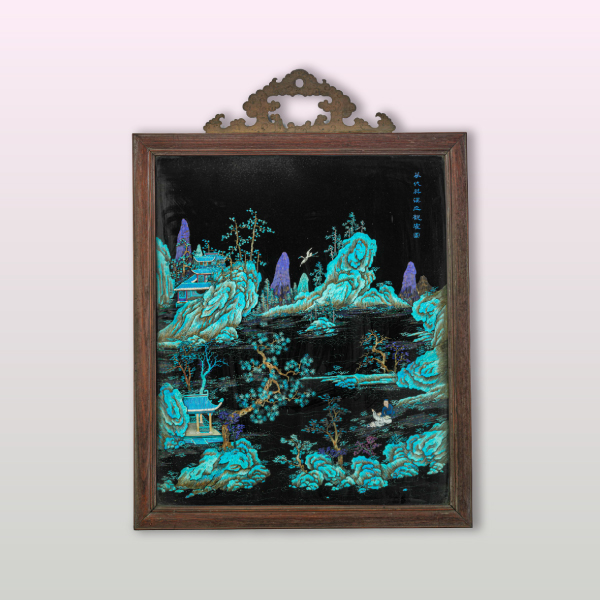
1005. Hanging screen with landscape
Hanging screen with landscape
Qing dynasty (1644–1911)
Zitan wood and kingfisher feather
© The Palace Museum
1005. Hanging screen with landscape
This hanging screen features a zitan wood base, and the central panel is inlaid with vibrant kingfisher feathers, whose colour does not fade with time.
Although the term dian cui, literally “dotting with kingfishers”, first appears in a 16th-century during Ming dynasty source, the tradition of decorating with feathers is considerably older. The craft reached its peak during the Ming and Qing dynasties. Some of the kingfisher feathers used in the Qing court were sourced from Southeast Asian regions, including Cambodia and Siam (modern-day Thailand). Kingfisher feathers were favoured for their unique structure, which determines the wavelength of reflected light, causing the feathers display a shifting bluish green spectrum that varies with the viewing angle and the lighting. These colours are dynamic and everlasting, and no ordinary pigment can rival them.
1005. Hanging screen with landscape
1005. Hanging screen with landscape
This hanging screen features a zitan wood base, and the central panel is inlaid with vibrant kingfisher feathers, whose colour does not fade with time.
Although the term dian cui, literally “dotting with kingfishers”, first appears in a 16th-century during Ming dynasty source, the tradition of decorating with feathers is considerably older. The craft reached its peak during the Ming and Qing dynasties. Some of the kingfisher feathers used in the Qing court were sourced from Southeast Asian regions, including Cambodia and Siam (modern-day Thailand). Kingfisher feathers were favoured for their unique structure, which determines the wavelength of reflected light, causing the feathers display a shifting bluish green spectrum that varies with the viewing angle and the lighting. These colours are dynamic and everlasting, and no ordinary pigment can rival them.
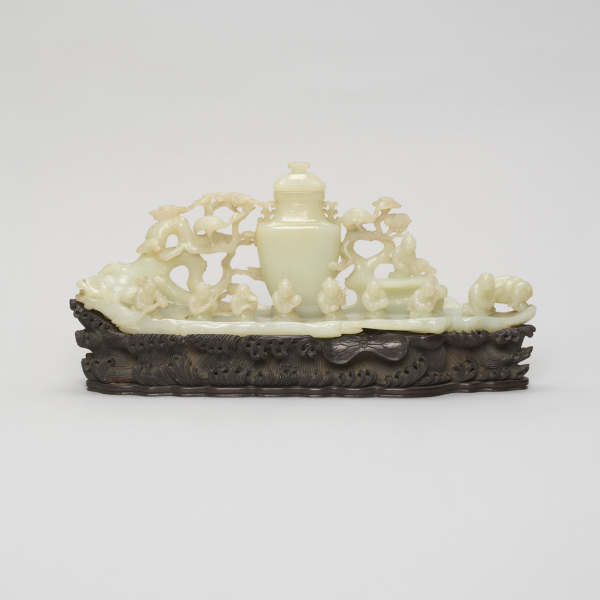
1006. Covered vase with figures on a boat
Covered vase with figures on a boat
Qing dynasty (1644–1911)
Jade (nephrite)
© The Palace Museum
1006. Covered vase with figures on a boat
This jade covered vase vividly depicts a scene of foreigners or subjects from border territories arriving by waterway to present auspicious animals and treasures to the court. Some figures carry ivory, ruyi sceptres, and pearls, and they are accompanied by a deer, cranes, and an elephant. One of these auspicious creatures, the elephant, originating from Yunnan or from Southeast and South Asia, was an established diplomatic gift and was also deeply embedded in Chinese culture as a symbol of good fortune. An elephant carrying a vase on its back, represents the wish for lasting peace and prosperity.
During the Qing dynasty, which lasted from the 17th to the 20th century, elephants received from southern territories and neighbouring states were kept at the imperial court and trained for use in processions at court rituals and on grand ceremonial occasions. Notably, these trained elephants were not reserved solely for imperial rites but also performed publicly for the citizens of Beijing on specific days.
1006. Covered vase with figures on a boat
1006. Covered vase with figures on a boat
This jade covered vase vividly depicts a scene of foreigners or subjects from border territories arriving by waterway to present auspicious animals and treasures to the court. Some figures carry ivory, ruyi sceptres, and pearls, and they are accompanied by a deer, cranes, and an elephant. One of these auspicious creatures, the elephant, originating from Yunnan or from Southeast and South Asia, was an established diplomatic gift and was also deeply embedded in Chinese culture as a symbol of good fortune. An elephant carrying a vase on its back, represents the wish for lasting peace and prosperity.
During the Qing dynasty, which lasted from the 17th to the 20th century, elephants received from southern territories and neighbouring states were kept at the imperial court and trained for use in processions at court rituals and on grand ceremonial occasions. Notably, these trained elephants were not reserved solely for imperial rites but also performed publicly for the citizens of Beijing on specific days.
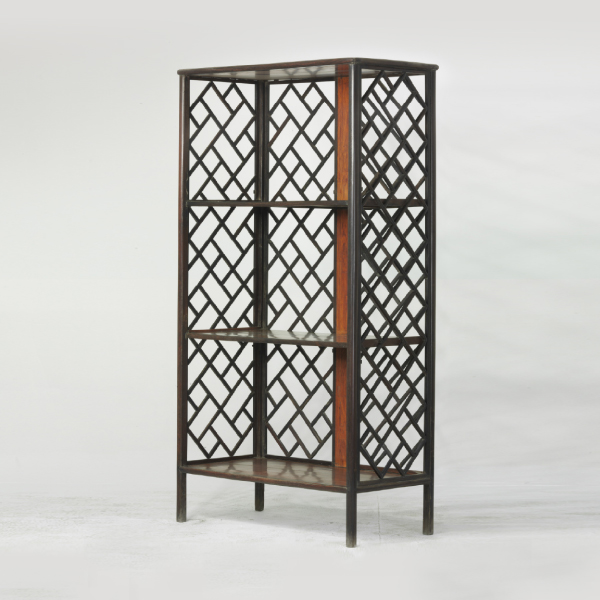
1007. Lattice-backed shelf
Lattice-backed shelf
Ming dynasty (1368–1644)
Zitan wood
© The Palace Museum
1007. Lattice-backed shelf
This lattice-backed shelf has panels on three sides; it has an intricate structure but retains an open and airy quality. It presents the beauty of the natural colour and texture of the zitan wood with minimal ornamentation, embodying the Ming furniture style.
Before the late 16th century, court furniture was generally made from locally produced softwoods and finished with layers of lacquer. Following the legalisation of foreign trade during the Longqing period (1567–1572) in 1567, hardwoods from Southeast Asia began to enter China in large quantities through the private trade. After that, hardwood became popular among the private households, and the trend spread to the court. Zitan trees grow primarily in tropical regions, including India and the islands of Southeast Asia, with only small numbers of trees found in Guangdong and Yunnan; however, its origin was in Mysore, at the southern tip of India. Zitan is a very valuable, slow-growing hardwood tree. It can take several centuries before it can be harvested to make furniture. Historical records note that a Noble Consort of the Chongzhen Emperor (r. 1628–1644) commissioned a zitan gauze cabinet at the cost of seven hundred taels of silver, which was equivalent to the annual living expenses of five hundred commoners. By the mid-17th to early 20th century during the Qing dynasty, zitan wood had become indispensable to the Imperial Workshops and was used extensively in the production of court furniture and scholarly objects. Wealthy merchants and prominent families also favoured furniture and everyday objects made with the precious zitan wood.
1007. Lattice-backed shelf
1007. Lattice-backed shelf
This lattice-backed shelf has panels on three sides; it has an intricate structure but retains an open and airy quality. It presents the beauty of the natural colour and texture of the zitan wood with minimal ornamentation, embodying the Ming furniture style.
Before the late 16th century, court furniture was generally made from locally produced softwoods and finished with layers of lacquer. Following the legalisation of foreign trade during the Longqing period (1567–1572) in 1567, hardwoods from Southeast Asia began to enter China in large quantities through the private trade. After that, hardwood became popular among the private households, and the trend spread to the court. Zitan trees grow primarily in tropical regions, including India and the islands of Southeast Asia, with only small numbers of trees found in Guangdong and Yunnan; however, its origin was in Mysore, at the southern tip of India. Zitan is a very valuable, slow-growing hardwood tree. It can take several centuries before it can be harvested to make furniture. Historical records note that a Noble Consort of the Chongzhen Emperor (r. 1628–1644) commissioned a zitan gauze cabinet at the cost of seven hundred taels of silver, which was equivalent to the annual living expenses of five hundred commoners. By the mid-17th to early 20th century during the Qing dynasty, zitan wood had become indispensable to the Imperial Workshops and was used extensively in the production of court furniture and scholarly objects. Wealthy merchants and prominent families also favoured furniture and everyday objects made with the precious zitan wood.
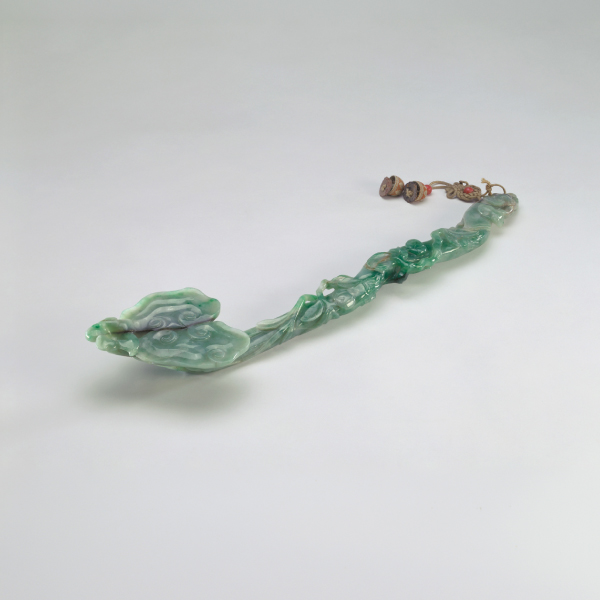
1008. Ruyi sceptre in the form of lingzhi fungus
Ruyi sceptre in the form of lingzhi fungus
Qing dynasty (1644–1911)
Jade (jadeite)
© The Palace Museum
1008. Ruyi sceptre in the form of lingzhi fungus
Jadeite was not only one of the most prized materials in the imperial collection but also a tangible record of the material exchange between the Qing court and Burma. Although Burmese jadeite was already being presented to the court as tribute by the Governor-generals and Governors of Yunnan during the Qianlong period (1736–1795), it had not yet been integrated into the traditional Chinese jade culture. As a result, the aesthetic criteria for selecting jadeite still followed those established for Khotan jade: a degree of translucency, a lustrous white tone, and a warm, smooth quality were favoured.
During the late 19th century during Qing dynasty, the Empress Dowager Cixi became fascinated with the glassy texture and vivid green colouring of jadeite, and the court regularly directed the major customs offices and Imperial Silk Manufactories, to source jadeite as a tribute for Empress Dowager Cixi. As a result, the prestige and value of jadeite soared. In 1864, the Empress Dowager drew on the storage of Palace Treasury to have jadeite fashioned into items for personal use, including bracelets, belt buckles, and archers’ thumb rings.
1008. Ruyi sceptre in the form of lingzhi fungus
1008. Ruyi sceptre in the form of lingzhi fungus
Jadeite was not only one of the most prized materials in the imperial collection but also a tangible record of the material exchange between the Qing court and Burma. Although Burmese jadeite was already being presented to the court as tribute by the Governor-generals and Governors of Yunnan during the Qianlong period (1736–1795), it had not yet been integrated into the traditional Chinese jade culture. As a result, the aesthetic criteria for selecting jadeite still followed those established for Khotan jade: a degree of translucency, a lustrous white tone, and a warm, smooth quality were favoured.
During the late 19th century during Qing dynasty, the Empress Dowager Cixi became fascinated with the glassy texture and vivid green colouring of jadeite, and the court regularly directed the major customs offices and Imperial Silk Manufactories, to source jadeite as a tribute for Empress Dowager Cixi. As a result, the prestige and value of jadeite soared. In 1864, the Empress Dowager drew on the storage of Palace Treasury to have jadeite fashioned into items for personal use, including bracelets, belt buckles, and archers’ thumb rings.
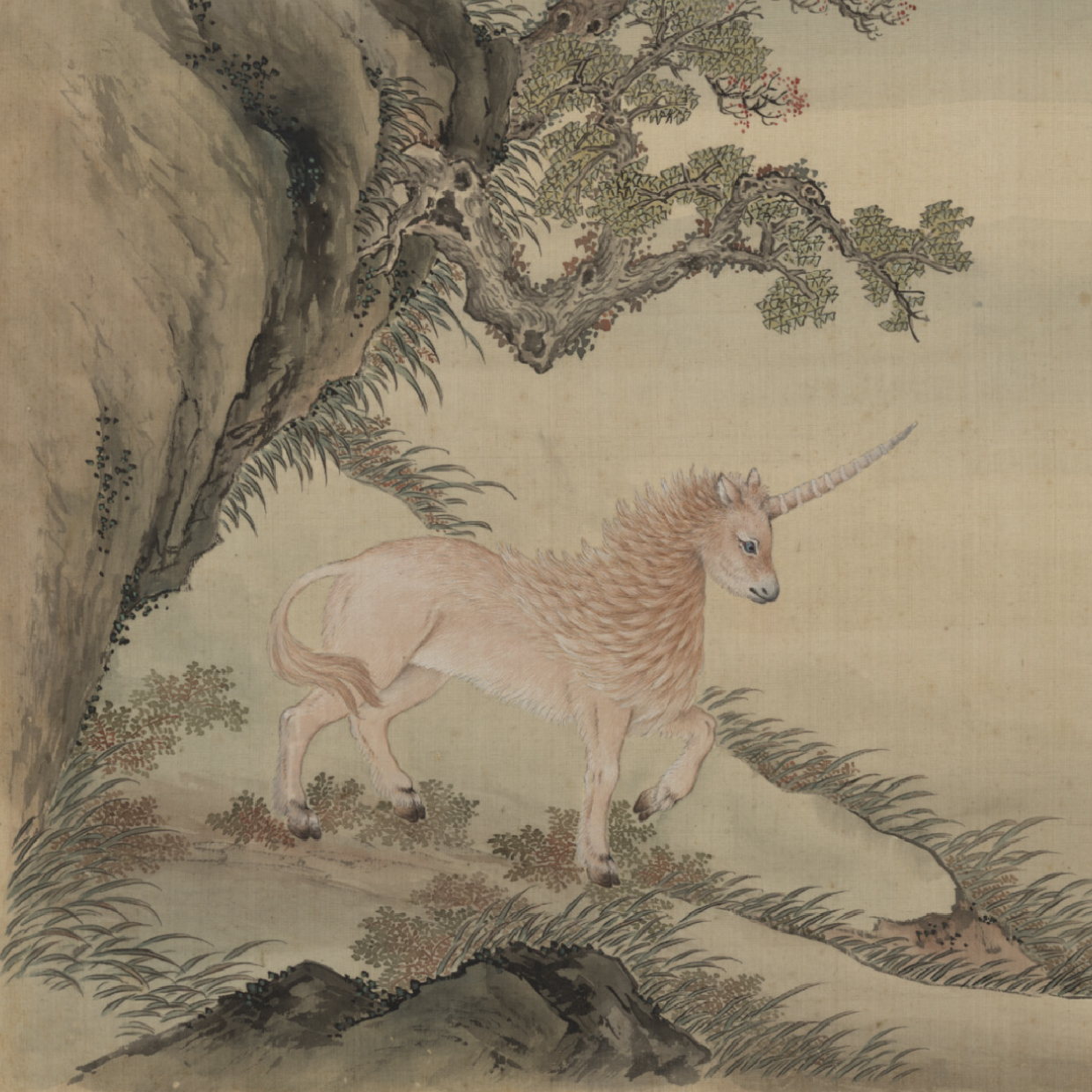
1009. Album of Beasts
Album of Beasts
Yu Sheng (1692–1767) and Zhang Weibang (active about 18th century)
Qing dynasty (1644–1911)
Album leaves, ink and colour on paper
© The Palace Museum
1009. Album of Beasts
To learn about animals today, people can find detailed information and rich imagery on the internet and with AI. Hundreds of years ago, without the internet, how did the Qing imperial court learn about animals from around the world? This Album of Beasts, with 180 illustrations, was their encyclopaedia of animals. It documented the appearance, names, physical characteristics, and habitats of creatures from across the globe. It stands as a significant testament to exchanges between China and other countries.
The work was commissioned in 1750 by the Qianlong Emperor (r. 1736–1795), who was an avid collector and devoted patron of the arts. He issued an imperial edict for Imperial court painters Yu Sheng and Zhang Weibang to undertake its creation, which eventually took them 11 years. Presented in a format where text and illustration sit side by side, and inspired by the work displayed nearby, Album of Birds, the right-hand pages have animals depicted in a traditional landscape using gongbi (fine brushwork) and heavy colours but also integrating European techniques of light and shadow to create a sense of three-dimensional depth. The left-hand pages carry annotations in both Manchu and Chinese, written by senior court officials, recording each animal's appearance, calls, behaviour, and place of origin. The images and textual descriptions are mainly from the Complete Classics Collection of Ancient China that was compiled during the Kangxi reign (1662–1722), supplemented by direct observations of live animals at the Qing court. Earlier sources extend to European works of natural history and geography, including the 16th-century Historia Animalium (History of Animals) and Kunyu Quantu (A Complete Map of the World), produced by the Jesuit Ferdinand Verbiest in the mid-17th century, during early Qing period.
Animals depicted in this Album of Beasts can be categorised into three groups. The Common Animals group includes familiar domestic animals and predators, such as cows, sheep, tigers, and bears. The Foreign Animals group comprises rare and extraordinary creatures from foreign lands. The Mythical Beasts group includes depictions of animals that are not found in the real world but exist only in legends, as in the ancient Classic of Mountains and Seas, also known as Shanhai Jing. This Album is therefore a zoological and geographical compendium with rich cultural symbolism.
1009. Album of Beasts
1009. Album of Beasts
To learn about animals today, people can find detailed information and rich imagery on the internet and with AI. Hundreds of years ago, without the internet, how did the Qing imperial court learn about animals from around the world? This Album of Beasts, with 180 illustrations, was their encyclopaedia of animals. It documented the appearance, names, physical characteristics, and habitats of creatures from across the globe. It stands as a significant testament to exchanges between China and other countries.
The work was commissioned in 1750 by the Qianlong Emperor (r. 1736–1795), who was an avid collector and devoted patron of the arts. He issued an imperial edict for Imperial court painters Yu Sheng and Zhang Weibang to undertake its creation, which eventually took them 11 years. Presented in a format where text and illustration sit side by side, and inspired by the work displayed nearby, Album of Birds, the right-hand pages have animals depicted in a traditional landscape using gongbi (fine brushwork) and heavy colours but also integrating European techniques of light and shadow to create a sense of three-dimensional depth. The left-hand pages carry annotations in both Manchu and Chinese, written by senior court officials, recording each animal's appearance, calls, behaviour, and place of origin. The images and textual descriptions are mainly from the Complete Classics Collection of Ancient China that was compiled during the Kangxi reign (1662–1722), supplemented by direct observations of live animals at the Qing court. Earlier sources extend to European works of natural history and geography, including the 16th-century Historia Animalium (History of Animals) and Kunyu Quantu (A Complete Map of the World), produced by the Jesuit Ferdinand Verbiest in the mid-17th century, during early Qing period.
Animals depicted in this Album of Beasts can be categorised into three groups. The Common Animals group includes familiar domestic animals and predators, such as cows, sheep, tigers, and bears. The Foreign Animals group comprises rare and extraordinary creatures from foreign lands. The Mythical Beasts group includes depictions of animals that are not found in the real world but exist only in legends, as in the ancient Classic of Mountains and Seas, also known as Shanhai Jing. This Album is therefore a zoological and geographical compendium with rich cultural symbolism.
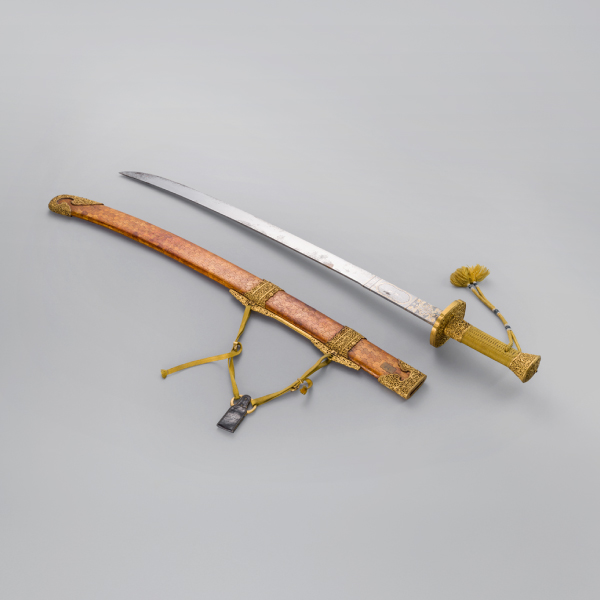
1010. “Chedian” sabre with scabbard
“Chedian” sabre with scabbard
Qing dynasty, Qianlong period (1736–1795)
Handle: wood; Scabbard: bark; Blade: steel
© The Palace Museum
1010. "Chedian" sabre with scabbard
This sabre from the Imperial Workshops features a design influenced by swords and sabres presented as tribute from the Ryukyu Kingdom. It reflects the active exchange of sabre-making techniques across East Asia.
Swords and sabres were among the representative tributes offered to the Qing court. The Japanese sabres in the Qing imperial collection were largely acquired by the king of Ryukyu from Japan and later presented as diplomatic gifts to the Qing court. The Yongzheng Emperor (r. 1723–1735) issued an edict instructing the Imperial Workshops to model the weapon carried by the guards after the Japanese sabres.
Apart from the sabres from Ryukyu, the Qing court also collected swords and sabres from other regions, including Joseon and Gorkha, reflecting the exchange between the Qing court and neighbouring regions.
1010. “Chedian” sabre with scabbard
1010. "Chedian" sabre with scabbard
This sabre from the Imperial Workshops features a design influenced by swords and sabres presented as tribute from the Ryukyu Kingdom. It reflects the active exchange of sabre-making techniques across East Asia.
Swords and sabres were among the representative tributes offered to the Qing court. The Japanese sabres in the Qing imperial collection were largely acquired by the king of Ryukyu from Japan and later presented as diplomatic gifts to the Qing court. The Yongzheng Emperor (r. 1723–1735) issued an edict instructing the Imperial Workshops to model the weapon carried by the guards after the Japanese sabres.
Apart from the sabres from Ryukyu, the Qing court also collected swords and sabres from other regions, including Joseon and Gorkha, reflecting the exchange between the Qing court and neighbouring regions.
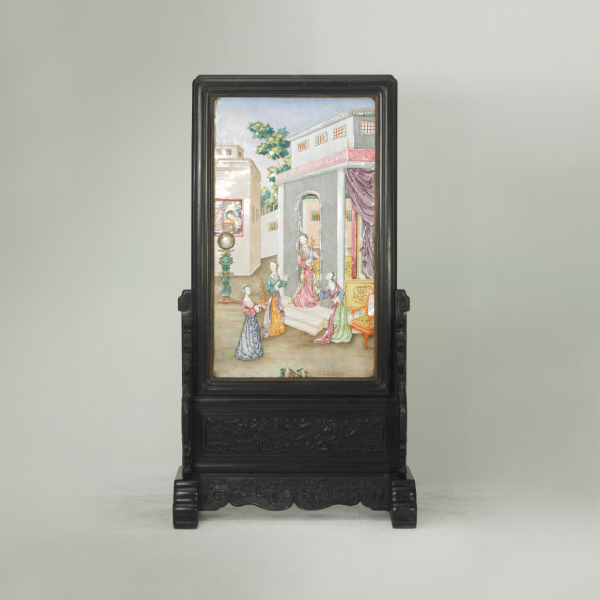
1011. Screen with Western figures
Screen with Western figures
Mid-Qing dynasty (about second half of the 18th century)
Zitan wood, painted enamel on copper
© The Palace Museum
1011. Screen with Western figures
Featuring figures in Western-style attire, the gorgeously coloured painted enamel on a copper panel rests on a base of precious zitan wood. The female figures in the composition wear European-style dress. On the left is a large European floor clock, which shares the frame with a Chinese pagoda, a ruyi sceptre, and a folding fan. This striking combination reflects Qing craftsmen's vivid imagination of European culture and aesthetics. The architectural elements were drawn using European linear perspective techniques, creating a distinct spatial depth.
The Kangxi (r. 1662–1722), Yongzheng (r. 1723–1735), and Qianlong (r. 1736–1795) Emperors’ favouritism towards the painted enamels led to the flourishment of these works during the 17th and 18th centuries. Historical records indicate that the Kangxi Emperor was deeply captivated by the European painted enamel technique. He sent European missionaries to France on several occasions to recruit craftsmen skilled in enamelling. He also imported European enamel colours and supported the development of enamel techniques within the Qing court. The Yongzheng Emperor was actively involved in designing decorative patterns for enamelled objects. During the Qianlong Emperor’s reign, artisans incorporated Western oil painting practices in creating decorative designs on painted enamels on porcelain.
This large-scale enamel screen, likely crafted in Guangzhou for the Qing court, demonstrates the exceptional skill used in its creation. The art of making painted enamels flourished in Guangzhou, an important port city and gathering place for foreigners and imported goods, was also where the craftsmanship reached remarkable levels. Guangzhou regularly supplied enamel materials and artisans for court enamel production during the reigns of the Kangxi, Yongzheng, and Qianlong, and finished enamelware was regularly presented as tribute to the Qing court.
1011. Screen with Western figures
1011. Screen with Western figures
Featuring figures in Western-style attire, the gorgeously coloured painted enamel on a copper panel rests on a base of precious zitan wood. The female figures in the composition wear European-style dress. On the left is a large European floor clock, which shares the frame with a Chinese pagoda, a ruyi sceptre, and a folding fan. This striking combination reflects Qing craftsmen's vivid imagination of European culture and aesthetics. The architectural elements were drawn using European linear perspective techniques, creating a distinct spatial depth.
The Kangxi (r. 1662–1722), Yongzheng (r. 1723–1735), and Qianlong (r. 1736–1795) Emperors’ favouritism towards the painted enamels led to the flourishment of these works during the 17th and 18th centuries. Historical records indicate that the Kangxi Emperor was deeply captivated by the European painted enamel technique. He sent European missionaries to France on several occasions to recruit craftsmen skilled in enamelling. He also imported European enamel colours and supported the development of enamel techniques within the Qing court. The Yongzheng Emperor was actively involved in designing decorative patterns for enamelled objects. During the Qianlong Emperor’s reign, artisans incorporated Western oil painting practices in creating decorative designs on painted enamels on porcelain.
This large-scale enamel screen, likely crafted in Guangzhou for the Qing court, demonstrates the exceptional skill used in its creation. The art of making painted enamels flourished in Guangzhou, an important port city and gathering place for foreigners and imported goods, was also where the craftsmanship reached remarkable levels. Guangzhou regularly supplied enamel materials and artisans for court enamel production during the reigns of the Kangxi, Yongzheng, and Qianlong, and finished enamelware was regularly presented as tribute to the Qing court.
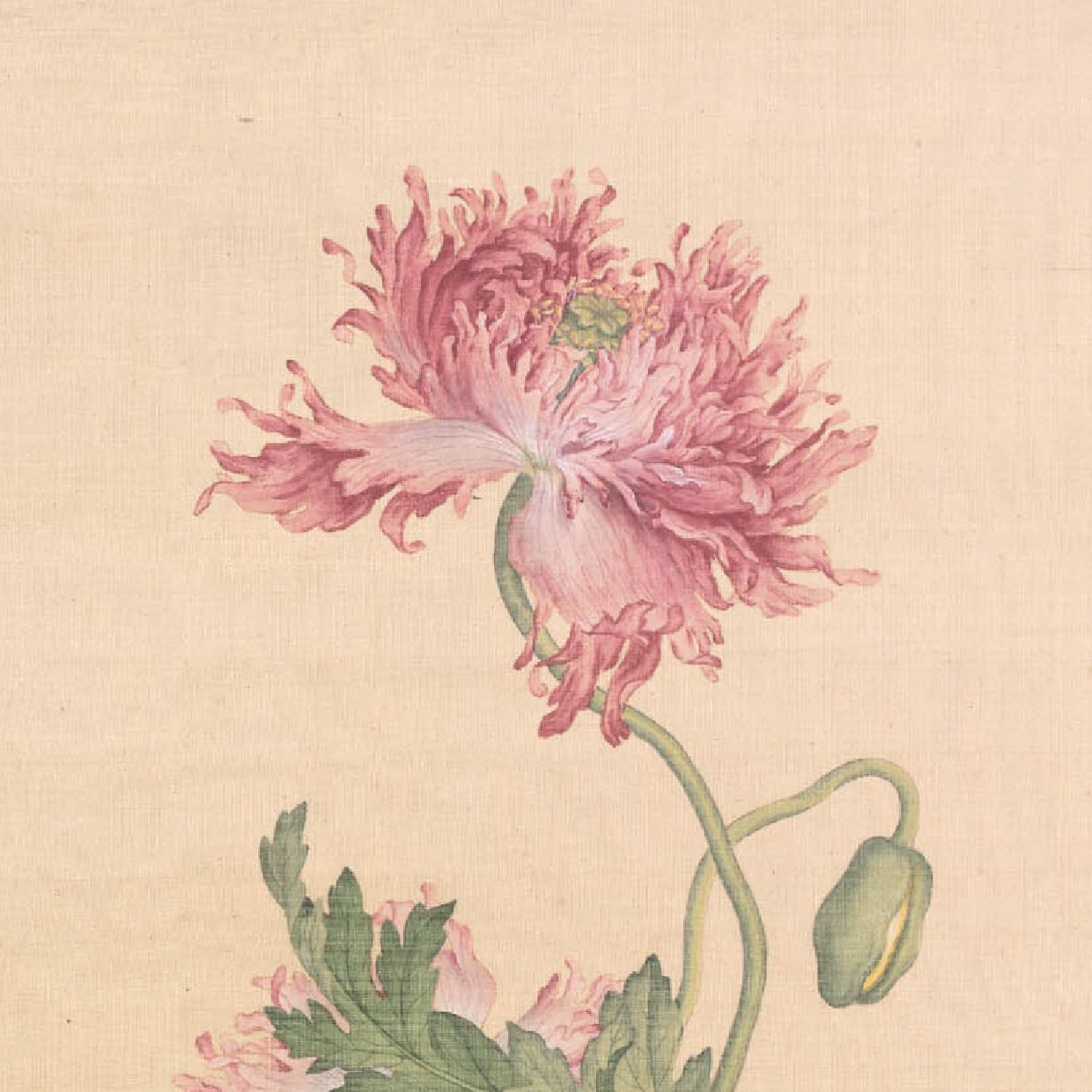
1012. Flowers and birds
Flowers and birds
Giuseppe Castiglione (1688–1766)
Qing dynasty (1644–1911)
Album leaf, ink and colour on silk
© The Palace Museum
1012. Flowers and birds
Several European painters served at the Qing court, with the Jesuit Giuseppe Castiglione being the most influential. Arriving in China in 1715, he introduced European techniques used for perspective, light, and shadow to court painters, bringing a wave of innovation to Qing imperial painting. He was held in high regard by the Kangxi (r. 1662–1722), Yongzheng (r. 1723–1735), and Qianlong (r. 1736–1795) Emperors.
The album presents the traditional subject matter of flowers and birds, yet numerous details where the subtle variations of light and shadow are clearly visible. The technique of using white paint to highlight areas of brightness and enhance the three-dimensionality of objects is frequently employed throughout the work.
At the Qing court, Castiglione frequently collaborated with Chinese painters, including Jiang Tingxi and Chen Mei; others, such as Zhang Weibang, became his pupils. Archival records show that Castiglione's contributions in the Qing court extended beyond painting to include adoption of his design on glassware and painted enamelware.
1012. Flowers and birds
1012. Flowers and birds
Several European painters served at the Qing court, with the Jesuit Giuseppe Castiglione being the most influential. Arriving in China in 1715, he introduced European techniques used for perspective, light, and shadow to court painters, bringing a wave of innovation to Qing imperial painting. He was held in high regard by the Kangxi (r. 1662–1722), Yongzheng (r. 1723–1735), and Qianlong (r. 1736–1795) Emperors.
The album presents the traditional subject matter of flowers and birds, yet numerous details where the subtle variations of light and shadow are clearly visible. The technique of using white paint to highlight areas of brightness and enhance the three-dimensionality of objects is frequently employed throughout the work.
At the Qing court, Castiglione frequently collaborated with Chinese painters, including Jiang Tingxi and Chen Mei; others, such as Zhang Weibang, became his pupils. Archival records show that Castiglione's contributions in the Qing court extended beyond painting to include adoption of his design on glassware and painted enamelware.
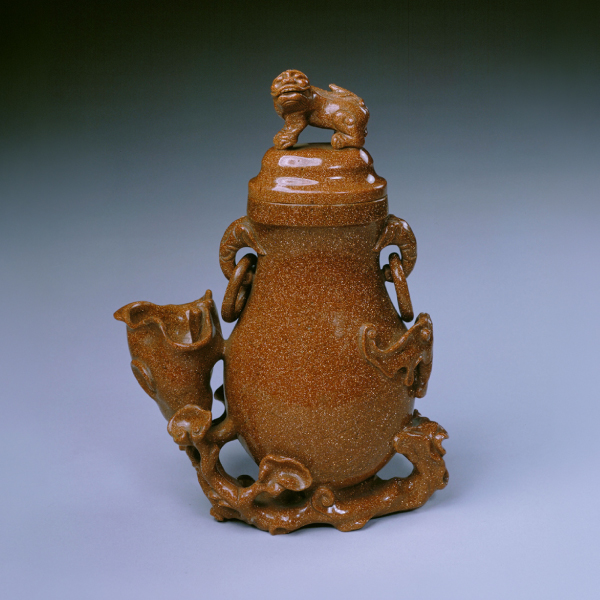
1013. Covered vase with lingzhi fungus and floral relief
Covered vase with lingzhi fungus and floral relief
Qing dynasty, Qianlong period (1736–1795)
Aventurine glass
© The Palace Museum
1013. Covered vase with lingzhi fungus and floral relief
This vase is made with aventurine glass, which originated in Venice. The signature sparkles are like stars in the night sky.
During the Kangxi reign of the Qing dynasty (1662–1722), European missionaries introduced Western glassware, including aventurine glass, into the Qing court, sparking the emperor's interest in glassware. The Imperial Workshops subsequently established a Glass Factory outside the Forbidden City, commissioning European missionaries as technical advisers and investing considerable effort in advancing the craft. By the Kangxi period, the Qing court had the ability to produce various types of glass, but not aventurine glass, which was the most technically demanding.
Supported by abundant human and material resources, and after decades of trial and error, the court finally mastered the production of aventurine glass in 1741. Thereafter, this lustrous material was used to craft decorative and utilitarian objects in the Qing court.
1013. Covered vase with lingzhi fungus and floral relief
1013. Covered vase with lingzhi fungus and floral relief
This vase is made with aventurine glass, which originated in Venice. The signature sparkles are like stars in the night sky.
During the Kangxi reign of the Qing dynasty (1662–1722), European missionaries introduced Western glassware, including aventurine glass, into the Qing court, sparking the emperor's interest in glassware. The Imperial Workshops subsequently established a Glass Factory outside the Forbidden City, commissioning European missionaries as technical advisers and investing considerable effort in advancing the craft. By the Kangxi period, the Qing court had the ability to produce various types of glass, but not aventurine glass, which was the most technically demanding.
Supported by abundant human and material resources, and after decades of trial and error, the court finally mastered the production of aventurine glass in 1741. Thereafter, this lustrous material was used to craft decorative and utilitarian objects in the Qing court.
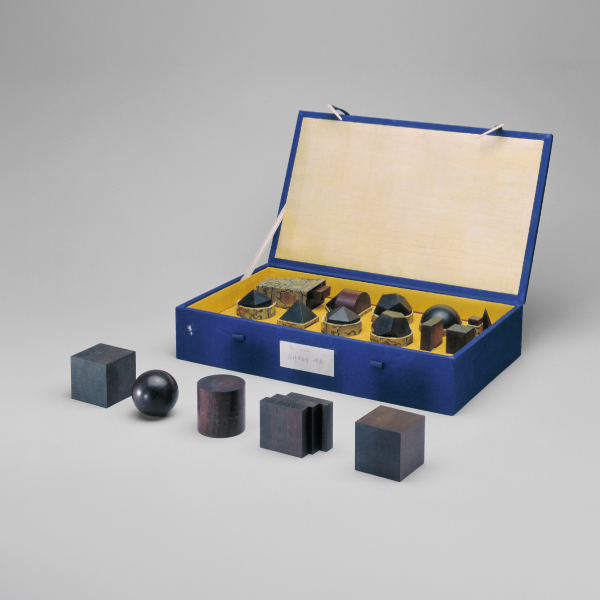
1014. Geometric polyhedron model
Geometric polyhedron model
Imperial Workshops
Qing dynasty, Kangxi period (1662–1722)
Phoebe wood
© The Palace Museum
1014. Geometric polyhedron model
Does this set of Qing dynasty models resemble the tools we used to study geometry in childhood? In fact, these seemingly unremarkable geometric polyhedron models were instructional aids for learning of geometry made by the Imperial Workshops for the Kangxi Emperor (r. 1662–1722), the only emperor in Chinese history to have systematically studied mathematics.
During the 17th century, at the turn of the Ming and Qing dynasties, European missionaries in China not only facilitated the transmission of Western art but also enabled the application of European science in the Qing court. The Kangxi Emperor was very interested in Western science. This interest stemmed from his youth, when officials of the Astronomical Office—responsible for observing celestial phenomena and calculating the calendar—engaged in debates with missionaries over European astronomy and the traditional Chinese calendrical system. These exchanges impressed upon him the importance of personally understanding astronomical knowledge and inspired a lasting enthusiasm for the study of Western mathematics and science.
He successively ordered several European missionaries to instruct him, including the Flemish Jesuit Ferdinand Verbiest, as well as the French Jesuits Jean-François Gerbillon and Joachim Bouvet. Their teachings ranged widely, from astronomy to geography, and also encompassed mathematics and medicine. He later set up the Mathematics Pavillion in the Changchun Garden to train talents in the mathematical sciences. Historical records show that the Kangxi Emperor used the geometric polyhedron models for precise calculations and made use of other European instruments to put his learning into practice. He also authored mathematical essays, including Imperially Composed Treatise on the Derivation of Triangles, in which he proposed innovative approaches to triangle calculation—for example, the method known as “determining the sides from the area”, a theorem for deriving the lengths of the opposite, adjacent, and hypotenuse of a right triangle from its known area. Subsequently, the Kangxi Emperor commissioned the compilation of a “mathematical encyclopaedia”, the Imperially Commissioned Basic Mathematical Principles. This work also included elements of European mathematical knowledge.
This set of models is not only a material record of cultural exchange between China and Europe, but also a vivid reflection of the Kangxi Emperor's expansive intellectual curiosity and avid pursuit of knowledge, which helped promote close interactions and cultural exchanges between the Qing court and the world.
1014. Geometric polyhedron model
1014. Geometric polyhedron model
Does this set of Qing dynasty models resemble the tools we used to study geometry in childhood? In fact, these seemingly unremarkable geometric polyhedron models were instructional aids for learning of geometry made by the Imperial Workshops for the Kangxi Emperor (r. 1662–1722), the only emperor in Chinese history to have systematically studied mathematics.
During the 17th century, at the turn of the Ming and Qing dynasties, European missionaries in China not only facilitated the transmission of Western art but also enabled the application of European science in the Qing court. The Kangxi Emperor was very interested in Western science. This interest stemmed from his youth, when officials of the Astronomical Office—responsible for observing celestial phenomena and calculating the calendar—engaged in debates with missionaries over European astronomy and the traditional Chinese calendrical system. These exchanges impressed upon him the importance of personally understanding astronomical knowledge and inspired a lasting enthusiasm for the study of Western mathematics and science.
He successively ordered several European missionaries to instruct him, including the Flemish Jesuit Ferdinand Verbiest, as well as the French Jesuits Jean-François Gerbillon and Joachim Bouvet. Their teachings ranged widely, from astronomy to geography, and also encompassed mathematics and medicine. He later set up the Mathematics Pavillion in the Changchun Garden to train talents in the mathematical sciences. Historical records show that the Kangxi Emperor used the geometric polyhedron models for precise calculations and made use of other European instruments to put his learning into practice. He also authored mathematical essays, including Imperially Composed Treatise on the Derivation of Triangles, in which he proposed innovative approaches to triangle calculation—for example, the method known as “determining the sides from the area”, a theorem for deriving the lengths of the opposite, adjacent, and hypotenuse of a right triangle from its known area. Subsequently, the Kangxi Emperor commissioned the compilation of a “mathematical encyclopaedia”, the Imperially Commissioned Basic Mathematical Principles. This work also included elements of European mathematical knowledge.
This set of models is not only a material record of cultural exchange between China and Europe, but also a vivid reflection of the Kangxi Emperor's expansive intellectual curiosity and avid pursuit of knowledge, which helped promote close interactions and cultural exchanges between the Qing court and the world.
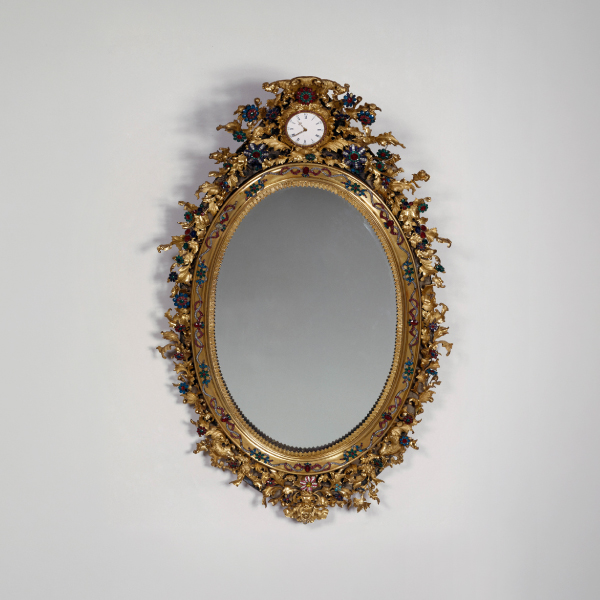
1015. Hanging mirror with a clock
Hanging mirror with a clock
Qing dynasty (1644–1911)
Gilt bronze, enamel, glass
© The Palace Museum
1015. Hanging mirror with a clock
Before glass mirrors came into common use, people in China looked at their reflections in polished bronze mirror, and had developed a refined craft and a distinctive aesthetic around bronze mirrors. Through the exchange of cultures and trade between China and the West, European glass mirrors began entering China in 17th century, offering an entirely new experience of grooming and reflection within the palace. By the mid- to late Qing dynasty, glass mirrors had become increasingly widespread and were gradually displacing the dominance of the bronze mirrors.
The glass mirror originated in Venice, Italy. Although the Qing court maintained its own glassworks throughout the Kangxi (r. 1662–1722), Yongzheng (r. 1723–1735), and Qianlong (r. 1736–1795) reigns, large glass mirrors continued to be imported primarily through the Canton Customs and were therefore rare and valuable. Used principally by the emperor when dressing before imperial audiences or by imperial consorts at their dressing tables, glass mirrors were regarded as symbols of power and wealth. From this we can see the central role of Guangzhou as the port through which rare and exceptional foreign goods were sourced as tributes to the imperial court.
1015. Hanging mirror with a clock
1015. Hanging mirror with a clock
Before glass mirrors came into common use, people in China looked at their reflections in polished bronze mirror, and had developed a refined craft and a distinctive aesthetic around bronze mirrors. Through the exchange of cultures and trade between China and the West, European glass mirrors began entering China in 17th century, offering an entirely new experience of grooming and reflection within the palace. By the mid- to late Qing dynasty, glass mirrors had become increasingly widespread and were gradually displacing the dominance of the bronze mirrors.
The glass mirror originated in Venice, Italy. Although the Qing court maintained its own glassworks throughout the Kangxi (r. 1662–1722), Yongzheng (r. 1723–1735), and Qianlong (r. 1736–1795) reigns, large glass mirrors continued to be imported primarily through the Canton Customs and were therefore rare and valuable. Used principally by the emperor when dressing before imperial audiences or by imperial consorts at their dressing tables, glass mirrors were regarded as symbols of power and wealth. From this we can see the central role of Guangzhou as the port through which rare and exceptional foreign goods were sourced as tributes to the imperial court.
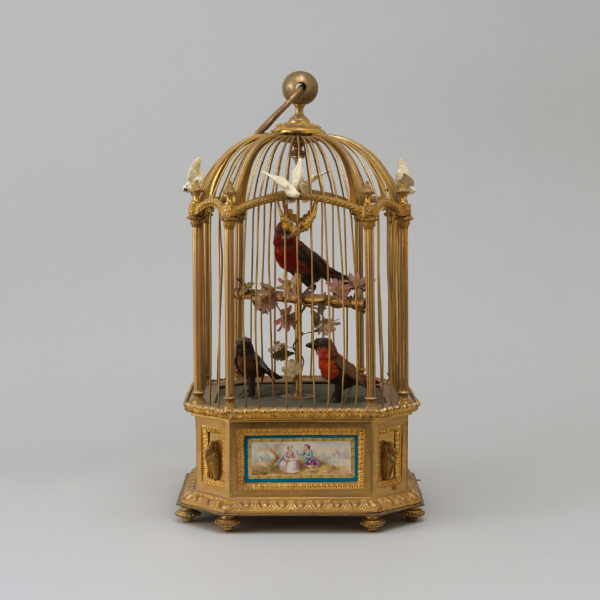
1016. Singing bird cage automaton
Singing bird cage automaton
France, 19th century
Gilt bronze, porcelain
© The Palace Museum
1016. Singing bird age automaton
This exquisite singing bird cage is a mechanical automaton produced by a European clockmaker in response to the widespread Qing-dynasty fashion for keeping caged birds. When the spring mechanism is wound, an intricate system of gears sets the small bird in motion, causing it to dance and sing within its cage. The Canton Customs once presented such a singing bird cage as a birthday tribute to the Qianlong Emperor (r. 1736-1795).
In the 17th to 20th centuries, during Qing dynasty, spring-driven automata were used to make not only singing birds but also models that mimicked the movements of animals and figures that were capable of writing, performing conjuring tricks, and dancing in remarkably lifelike ways. Bringing considerable delight to palace life, these vivid mechanical toys captivated the interest of the Qianlong Emperor and later became firm favourites of the Guangxu (r. 1875–1908) and Xuantong Emperors (r. 1909–1911).
1016. Singing bird cage automaton
1016. Singing bird age automaton
This exquisite singing bird cage is a mechanical automaton produced by a European clockmaker in response to the widespread Qing-dynasty fashion for keeping caged birds. When the spring mechanism is wound, an intricate system of gears sets the small bird in motion, causing it to dance and sing within its cage. The Canton Customs once presented such a singing bird cage as a birthday tribute to the Qianlong Emperor (r. 1736-1795).
In the 17th to 20th centuries, during Qing dynasty, spring-driven automata were used to make not only singing birds but also models that mimicked the movements of animals and figures that were capable of writing, performing conjuring tricks, and dancing in remarkably lifelike ways. Bringing considerable delight to palace life, these vivid mechanical toys captivated the interest of the Qianlong Emperor and later became firm favourites of the Guangxu (r. 1875–1908) and Xuantong Emperors (r. 1909–1911).
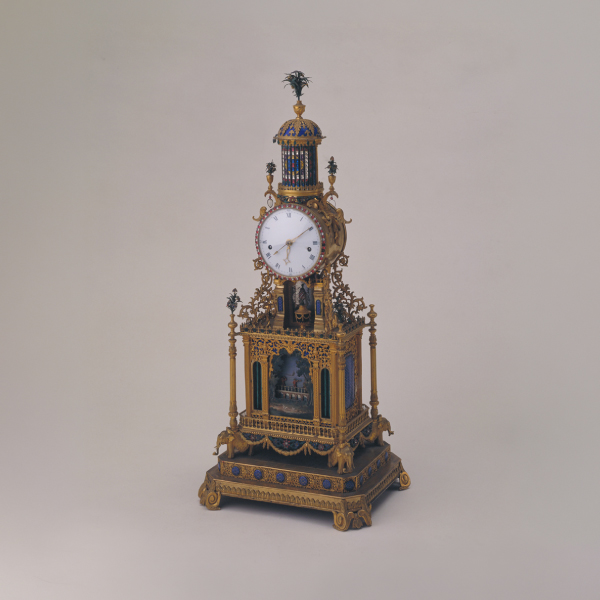
1017. Musical clock
Musical clock
Qing dynasty (1644–1911)
Gilt bronze, enamel, glass
© The Palace Museum
1017. Musical clock
Clocks and watches are indispensable to modern life; in earlier times, however, these instruments of timekeeping were prized European treasures, displaying their owners’ power, status, and wealth. European timepieces were favoured by the Wanli Emperor (r. 1573–1620) of the Ming dynasty and the Kangxi (r. 1662–1722), Yongzheng (r. 1723–1735), and Qianlong (r. 1736–1795) Emperors of the Qing for their functional accuracy, sophisticated structure, and dazzling appearance. The Kangxi and Qianlong emperors even brought striking clocks with them on their Southern Inspection Tours, which shows their fascination with these timepieces.
From 1757, during the Qianlong reign, Guangzhou became the sole port open to foreign trade. It served not only as the primary hub of trade between China and the world but also as the gateway through which timepieces and clockmaking skills from Europe entered the imperial court. Artisans from Guangzhou were able to learn forms, styles, and techniques directly from European artisans. During the Qianlong reign (1736–1795), the court required Guangzhou officials to send European clocks and other foreign goods as tribute. As clockmaking expertise advanced, artisans blended Chinese and European craft traditions to produce “Canton timepieces”. These clocks were submitted to the Qing court as tribute via the Canton Customs. Guangzhou was far more than a transit point for exotic goods. It stood as a vital nexus of cultural and technological exchange between China and the West.
1017. Musical clock
1017. Musical clock
Clocks and watches are indispensable to modern life; in earlier times, however, these instruments of timekeeping were prized European treasures, displaying their owners’ power, status, and wealth. European timepieces were favoured by the Wanli Emperor (r. 1573–1620) of the Ming dynasty and the Kangxi (r. 1662–1722), Yongzheng (r. 1723–1735), and Qianlong (r. 1736–1795) Emperors of the Qing for their functional accuracy, sophisticated structure, and dazzling appearance. The Kangxi and Qianlong emperors even brought striking clocks with them on their Southern Inspection Tours, which shows their fascination with these timepieces.
From 1757, during the Qianlong reign, Guangzhou became the sole port open to foreign trade. It served not only as the primary hub of trade between China and the world but also as the gateway through which timepieces and clockmaking skills from Europe entered the imperial court. Artisans from Guangzhou were able to learn forms, styles, and techniques directly from European artisans. During the Qianlong reign (1736–1795), the court required Guangzhou officials to send European clocks and other foreign goods as tribute. As clockmaking expertise advanced, artisans blended Chinese and European craft traditions to produce “Canton timepieces”. These clocks were submitted to the Qing court as tribute via the Canton Customs. Guangzhou was far more than a transit point for exotic goods. It stood as a vital nexus of cultural and technological exchange between China and the West.
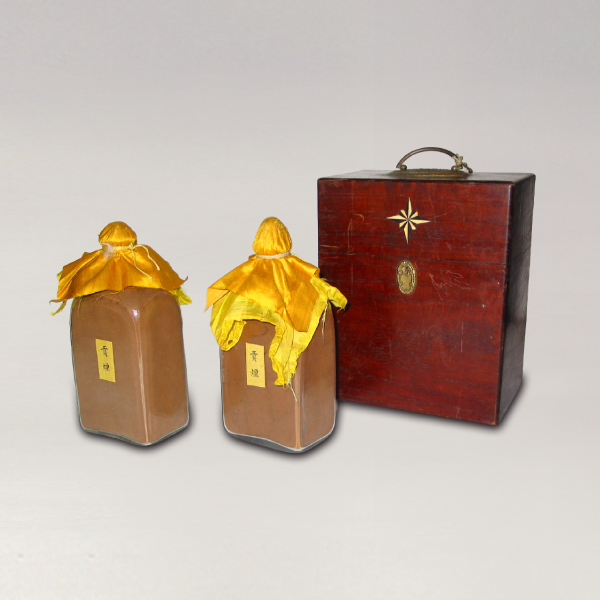
1018. Snuff tobacco
Snuff tobacco
Qing dynasty (1644–1911)
Bottle: glass; Box: wood
© The Palace Museum
1018. Snuff tobacco
Snuff was introduced to China from the West as early as the Kangxi reign (1662–1722). Produced from finely ground, fermented tobacco leaves blended with aromatic substances, it was taken by inhaling the powder directly into the nostrils, which produced a sensation of clarity and gentle stimulation. In the West, snuff was stored in flat boxes. Upon its introduction to China, these fine powders prompted the evolution of a distinctive new vessel, the snuff bottle. The bottles were characterised by an expanded body, a narrow mouth, and a fitted stopper incorporating a small spoon. They were crafted from a vast array of materials. As the use of snuff became a fashion across Chinese society, these bottles came to transcend daily utility. They became collectibles and were exchanged and bestowed as gifts. The craftsmanship and design grew more refined and inventive, represent the finest achievements of both Chinese and Western cultural exchanges and imperial craftsmanship. The snuff bottle became one of the most representative examples of miniature art in the decorative arts of the Qing dynasty.
1018. Snuff tobacco
1018. Snuff tobacco
Snuff was introduced to China from the West as early as the Kangxi reign (1662–1722). Produced from finely ground, fermented tobacco leaves blended with aromatic substances, it was taken by inhaling the powder directly into the nostrils, which produced a sensation of clarity and gentle stimulation. In the West, snuff was stored in flat boxes. Upon its introduction to China, these fine powders prompted the evolution of a distinctive new vessel, the snuff bottle. The bottles were characterised by an expanded body, a narrow mouth, and a fitted stopper incorporating a small spoon. They were crafted from a vast array of materials. As the use of snuff became a fashion across Chinese society, these bottles came to transcend daily utility. They became collectibles and were exchanged and bestowed as gifts. The craftsmanship and design grew more refined and inventive, represent the finest achievements of both Chinese and Western cultural exchanges and imperial craftsmanship. The snuff bottle became one of the most representative examples of miniature art in the decorative arts of the Qing dynasty.
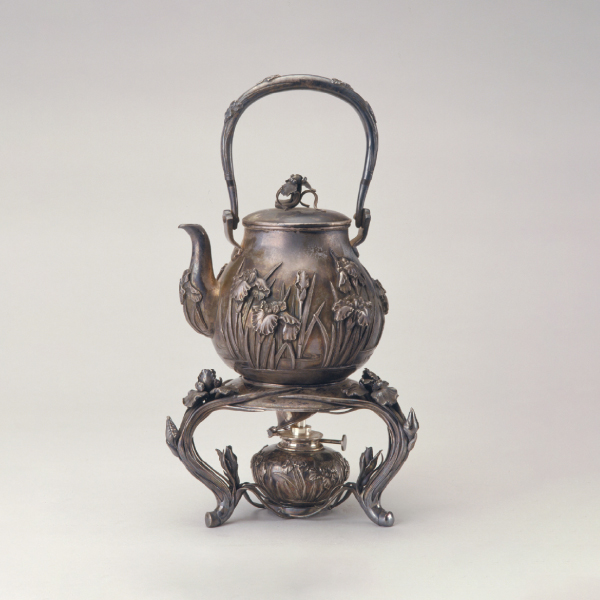
1019. Iris-decorated kettle with handle
Iris-decorated kettle with handle
Musashiya
Japan, Meiji period (1868–1912)
Silver
© The Palace Museum
1019. Iris-decorated kettle with handle
Beginning in the 18th century, tea became the leading export commodity of the Qing dynasty, surpassing all other exported goods in overall value. After the Canton Customs was designated as the sole gateway for foreign trade, tea from Anhui, Fujian, and other provinces across China made its way to the global market through the port. Each year, forty to fifty thousand piculs of tea were exported to countries including Britain, France, the Netherlands, Sweden, and elsewhere. At its peak, the tea trade accounted for most of the Canton Customs' revenues.
The export of tea not only augmented the Qing court's finances but also gave rise to a culture of tea drinking across Europe. Following the introduction of tea to Europe, it became fashionable among the aristocracy and social elites. As the import volume surged, tea grew into both a medicinal remedy and a healthy everyday beverage and gained popularity across Europe. As Chinese tea made its way into Britain in large quantities, the British localised tea drinking, combining tea, sugar, and milk into a British tradition of afternoon tea. With the popularity of tea drinking, the European aristocrats not only used Chinese export ware but also developed their own tea ware. Aspects of the Western lifestyle were popular in Japan after the Meiji Restoration. Silversmiths produced tea ware modelled on European designs, and some of these reached the Qing court through diplomatic channels. Tea culture reached across the globe through trade, was adapted, and brought new perspectives back to Chinese tea culture itself. A diverse and interconnected tea culture was forged.
1019. Iris-decorated kettle with handle
1019. Iris-decorated kettle with handle
Beginning in the 18th century, tea became the leading export commodity of the Qing dynasty, surpassing all other exported goods in overall value. After the Canton Customs was designated as the sole gateway for foreign trade, tea from Anhui, Fujian, and other provinces across China made its way to the global market through the port. Each year, forty to fifty thousand piculs of tea were exported to countries including Britain, France, the Netherlands, Sweden, and elsewhere. At its peak, the tea trade accounted for most of the Canton Customs' revenues.
The export of tea not only augmented the Qing court's finances but also gave rise to a culture of tea drinking across Europe. Following the introduction of tea to Europe, it became fashionable among the aristocracy and social elites. As the import volume surged, tea grew into both a medicinal remedy and a healthy everyday beverage and gained popularity across Europe. As Chinese tea made its way into Britain in large quantities, the British localised tea drinking, combining tea, sugar, and milk into a British tradition of afternoon tea. With the popularity of tea drinking, the European aristocrats not only used Chinese export ware but also developed their own tea ware. Aspects of the Western lifestyle were popular in Japan after the Meiji Restoration. Silversmiths produced tea ware modelled on European designs, and some of these reached the Qing court through diplomatic channels. Tea culture reached across the globe through trade, was adapted, and brought new perspectives back to Chinese tea culture itself. A diverse and interconnected tea culture was forged.






-1780041291.jpg)